Erythrocytes
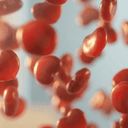
Red blood cellsRed blood cells (erythrocytes) are the most abundant blood cells and carry oxygen from lungs to tissues throughout the body via hemoglobin.
Also known as: red blood cells, RBC, red cell count, Erys
They have a biconcave disc shape that maximizes surface area for gas exchange.
Reference range
Female
| Level | Range |
|---|---|
| High | above 5.2 10E12/l |
| Normal | 3.9 to 5.2 10E12/l |
| Low | below 3.9 10E12/l |
Male
| Level | Range |
|---|---|
| High | above 5.75 10E12/l |
| Normal | 4.3 to 5.75 10E12/l |
| Low | below 4.3 10E12/l |
Source: lab benchmark · LOINC code: 26453-1
* Reference ranges may vary between labs and assays. Always interpret results with your healthcare provider.
Why this matters
Red blood cell levels provide early warning of potential issues with oxygen delivery and overall blood health. Low counts (anemia) may cause fatigue, weakness, shortness of breath, dizziness, or pale skin as tissues receive less oxygen. High counts (polycythemia) can thicken the blood and increase clot risk, potentially leading to headaches, blurred vision, or ruddy skin. Monitoring these levels helps detect changes early, with lifestyle factors such as adequate intake of iron, vitamin B12, and folate supporting healthy red blood cell levels.
How this connects to other biomarkers
- Low red blood cell count with low Hemoglobin and low Hematocrit confirms anemia — the red-cell indices (MCV, MCH, MCHC) classify what type.
- Elevated RBC with elevated Hgb/Hct suggests polycythemia (too many red cells — primary, or secondary to low oxygen or EPO excess).
- Very elevated RDW-CV / RDW-SD signals a mix of large and small red cells and can precede overt anemia; combined with low MCV it is the earliest signal of evolving iron deficiency.
How often should I test Erythrocytes?
Most adults benefit from yearly RBC count testing as part of a complete blood count. If you're investigating anemia, recovering from blood loss, or on a relevant medication, your clinician guides the cadence, typically every 4 to 8 weeks until stable.
At baseline / for screening: Once every 12 months from age 30 as part of a comprehensive panel.
When monitoring an intervention or change: Retest 4 to 8 weeks after starting iron, B12, or folate supplementation for anemia, or after blood loss recovery. Red blood cells take about 120 days to fully turn over, so meaningful changes in cell size and content (MCV, MCH) take 3 to 4 months. Hydration on the morning of the draw shifts concentration-based measures, so reproduce conditions for reliable trends.
Note: Dehydration falsely elevates RBC count (hemoconcentration); overhydration dilutes it. Standardize hydration on the morning of the draw, and wait 8 to 12 weeks after acute blood loss before reading the next value as a stable baseline.
Included in

Ready to check your health?
Get a comprehensive view of your biomarkers with our advanced check-up packages.