Usually, the medical process starts once symptoms appear: first diagnosis, then treatment. By that point, however, the body may have already undergone significant changes.
A disease can progress silently—sometimes more than we realize. The problem: the later it's detected, the harder it is to treat.
Preventive whole-body MRIs start earlier – identifying pathological changes before any symptoms are noticeable. More and more medical professionals are realizing: early detection isn't just useful—it can be crucial.
The concept behind a full-body MRI
A full-body MRI gives you something few medical tools can: a complete, detailed image of your body at a single point in time. Organs, tissue, blood vessels—even small tumors become visible. MRI is not a fortune teller; it's a precise diagnostic tool that reveals hidden risks.
Your entire body: not just individual organs
Most scans focus on one area. The heart. The lungs. The liver. Useful, of course—but like looking through a keyhole. You see one part, not how everything connects. A full-body MRI shifts that view. It looks at the whole system – and shows the interaction between them —where early signs of imbalance often appear first.
However, screening isn’t the same as health surveillance
A tumor presents a yes/no question—it’s either there or it isn’t. But subtle changes in muscle composition, inflammatory responses, or fat distribution tell deeper stories unfolding over months and years. Whole-body MRIs serve as baseline references, pinpointing minimal changes and emerging trends long before they trigger noticeable symptoms or raise alarms in lab tests.
In this context, it goes beyond merely detecting illness. It's about recognizing patterns, tracking developments, and empowering you to make informed, proactive choices—whether in lifestyle, preventive care, or targeted interventions.
If you want to take proactive care of your health, a full-body MRI gives you a whole new way of seeing yourself. Unlike traditional exams that usually focus on one specific issue, this scan offers a complete overview – a kind of deep look inside your body, without surgery and without radiation. And it’s not just for people with symptoms or known risk factors. Early detection can be valuable for anyone.
The technology creates high-resolution 3D images of:
- Brain & nervous system → Early detection of tumors, multiple sclerosis, aneurysms, neurodegenerative atrophy (brain shrinkage), and vascular abnormalities through detailed analysis of brain structure.
- Abdominal organs → Comprehensive examination of the liver, kidneys, pancreas, spleen, and adrenal glands to detect cysts, tumors, iron deposits, and structural changes.
- Metabolism & digestion → Screening for metabolic disorders like MASLD (metabolic dysfunction-associated steatotic liver disease), now one of the main causes of chronic liver disease and liver transplants in the US and Europe.
- Spine & joints → Detects cartilage wear, nerve compression, and disc degeneration – key factors in preventing chronic back pain and mobility issues.
- Cancer screening → Identifies early-stage tumors in the brain, liver, pancreas, and soft tissue – which can significantly improve treatment options and survival chances.
Who should consider a full-body MRI with Ahead?
If you feel it's time to take a closer look at your health—perhaps due to family history or vague symptoms—the Ahead MRI check-up could be exactly what you need. It's equally valuable if you’re seeking peace of mind without waiting for symptoms to appear. This is especially beneficial for people with stressful lifestyles, high performance demands, or specific health concerns.
How does a full-body MRI work?
No blood, no needles, no invasive procedures. MRI uses a powerful magnetic field and radio waves to interact with hydrogen atoms in your body. When these atoms realign, they emit signals that are translated into crystal-clear images.
The result? A detailed, high-resolution snapshot of your body—completely radiation-free, yet incredibly precise.
What does this mean for you?
- No radiation exposure, completely safe for your body.
- Exceptional precision: It detects even the smallest irregularities in soft tissue, long before they cause any symptoms.
- Incredibly valuable for early detection, an MRI reveals what regular X-rays or ultrasounds frequently miss.
The process: What happens inside the MRI scanner?
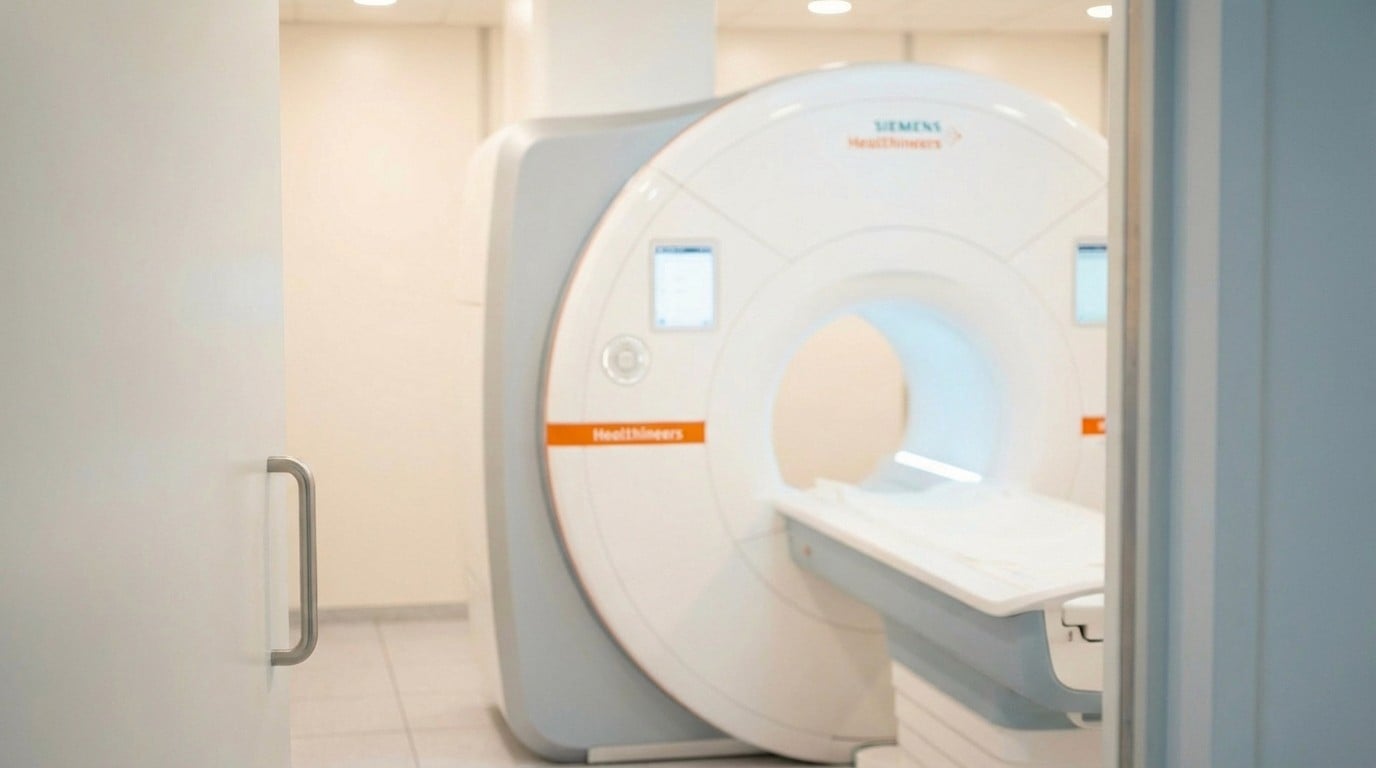
You’ll lie down comfortably on a table that gently slides into the tube-shaped MRI machine. Once inside, the magnetic field starts doing its work—you might hear knocking or humming sounds, but physically, you won’t feel a thing. As mentioned earlier, this is because the MRI interacts only with the hydrogen atoms inside your body. While you relax and lie still, high-tech magic is happening quietly behind the scenes:
- Every detail becomes visible: soft tissues, nerves, organs—even inflammation or subtle tissue changes.
- No contrast dye needed: In most cases, the natural water content in your body serves as a sufficient "marker."
- Real-time analysis: Radiologists can observe images live during the scan and immediately spot anything unusual.
What exactly is included in the full-body check-up at Ahead?
The MRI check-up gives you detailed insights into your brain, cardiovascular system, thyroid, spleen, liver, pancreas, gallbladder, kidneys and adrenal glands, bladder, uterus or prostate, your spine, and even your upper leg muscles. In other words, practically all the areas that matter when it comes to assessing your overall health.
Who should consider getting a full-body MRI?
A full-body MRI is generally suitable for anyone who wants a complete picture of their health. But it’s especially valuable for people with certain backgrounds or concerns:
- Individuals with a family history of cancer, cardiovascular conditions, or neurological disorders.
- People whose close relatives have experienced serious illnesses like heart attacks, strokes, aneurysms (especially cerebral), or cancer.
- Anyone seeking a holistic health assessment beyond standard blood tests and routine examinations.
- Athletes and physically active individuals who want detailed insight into their musculoskeletal system.
- People experiencing unexplained symptoms that traditional diagnostic methods haven’t resolved.
Recommended MRI focus, based on risk factors
| Risk Factor | Recommended MRI Focus Areas |
|---|---|
| Family history of cancer | Enhanced imaging of high-risk organs (breast, prostate, pancreas) |
| Cardiovascular risk (high cholesterol, family history of heart disease) | Calcium-score CT (not MRI) to assess calcified plaque in the coronary arteries |
| Family history of neurological disorders (Alzheimer’s, Parkinson’s) | Detailed brain scans for early detection of neurodegenerative processes |
| Athletes & physically active individuals | Muscular MRIs focusing on joints, ligaments, and tendons |
Some conditions are age-related – like osteoporosis or neurodegenerative diseases. Others are heavily influenced by genetics, such as breast cancer or aneurysms. And then there are the effects of lifestyle: diet, stress, physical activity, and smoking all play a major role in shaping your personal health risks.
A good MRI isn’t a one-size-fits-all procedure – it’s tailored prevention. Ahead’s scans are designed to reflect your most relevant risk factors, ensuring that no critical aspect of your health gets overlooked.
Your early warning system, driven by science, not guesswork
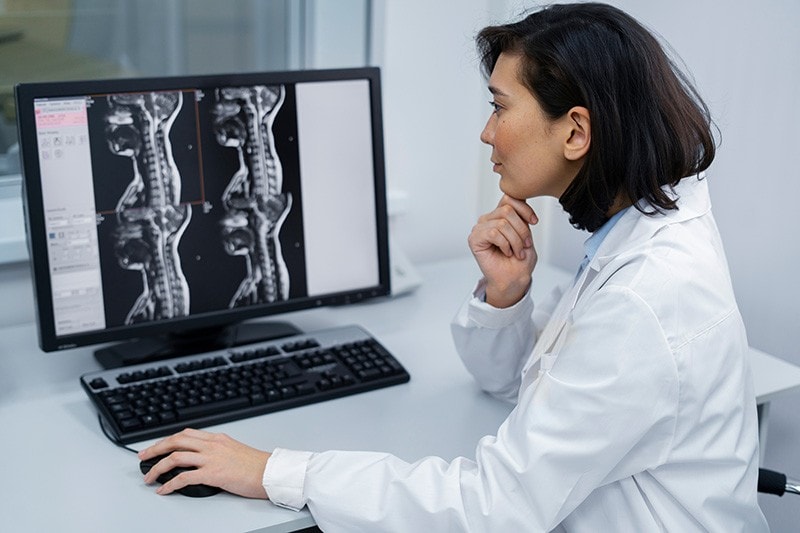
The earlier you detect a health issue, the better your odds of managing it effectively or even halting its progression entirely. Take your spine, for instance: Chronic back pain often starts quietly, with subtle issues like slipped discs, spinal stenosis, or nerve compression caused by poor posture, lack of exercise, or incorrect lifting techniques.
The same logic applies to your brain. Minor vascular changes can remain hidden for years. Detect them early enough, and you significantly reduce the risk of stroke and cognitive decline.
As doctors frequently emphasize, “The sooner a problem is identified, the better your treatment options become—enhancing your chances of recovery and paving the way for a healthier future.”
The Science of Early Detection—Facts That Matter
- Cancer in general: Once cancer begins to spread, survival odds decrease sharply.
- Brain health: Early indicators of Alzheimer’s and Parkinson’s disease can also appear years before symptoms surface. MRIs are capable of identifying subtle structural brain changes, highlighting abnormalities that aren't typical for your age.
- Prostate cancer: In men with a raised PSA, MRI helps decide who needs a biopsy.
- Cardiovascular disease: Aneurysms—dangerous enlargements of blood vessels, typically in the aorta—often remain undetected until they rupture, carrying a high risk of mortality. An MRI scan precisely maps their shape, size, and location, making preventive treatment planning possible before emergencies arise.
MRI vs. Other Imaging Methods: Strengths and Limitations
| Feature | MRI | CT Scan | PET Scan | Ultrasound |
|---|---|---|---|---|
| Radiation-free | Yes | No (ionizing radiation) | No (ionizing radiation) | Yes |
| Detailed soft-tissue imaging | Excellent | Limited | Excellent (focused on metabolic activity) | Yes |
| Whole-body examination | Yes | No (targeted areas only) | Yes | No |
| Early tumor detection | Yes | Yes (but involves radiation) | Yes (via metabolic activity) | Limited |
| Detection of brain changes | Yes | Yes (structural damage like bleeding) | Yes (neurodegenerative diseases) | No |
| Examination speed | Slower (15-30mins) | Fast (<10mins) | Very slow (several hours) | Very fast |
| Best for lung imaging | Limited | Yes | No | No |
| Functional imaging | Limited | No | Yes (metabolic activity) | No |
Why choose an MRI check-up instead of traditional preventive care?
A full-body MRI gives you high-resolution, radiation-free images of your body—in just a single session. MRI provides precise, detailed visualization of internal organs, tissues, and vascular structures. However, it doesn't replace every traditional screening method. Tests like mammograms, lung function assessments, or comprehensive lab analyses can be important complements not covered by MRI alone. That’s why Ahead combines multiple diagnostic tests, to tackle a broader preventive care.