Your insurance may cover part of your check-up · Check your coverage

Your insurance may cover part of your check-up · Check your coverage

eye on your health

Does your insurance cover your blood test?

Many Swiss supplementary insurers cover part or all of the cost of preventive blood tests. Check in 30 seconds if yours is included.


eye on your health

Does your insurance cover your blood test?

Many Swiss supplementary insurers cover part or all of the cost of preventive blood tests. Check in 30 seconds if yours is included.

eye on your health

Does your insurance cover your blood test?

Many Swiss supplementary insurers cover part or all of the cost of preventive blood tests. Check in 30 seconds if yours is included.

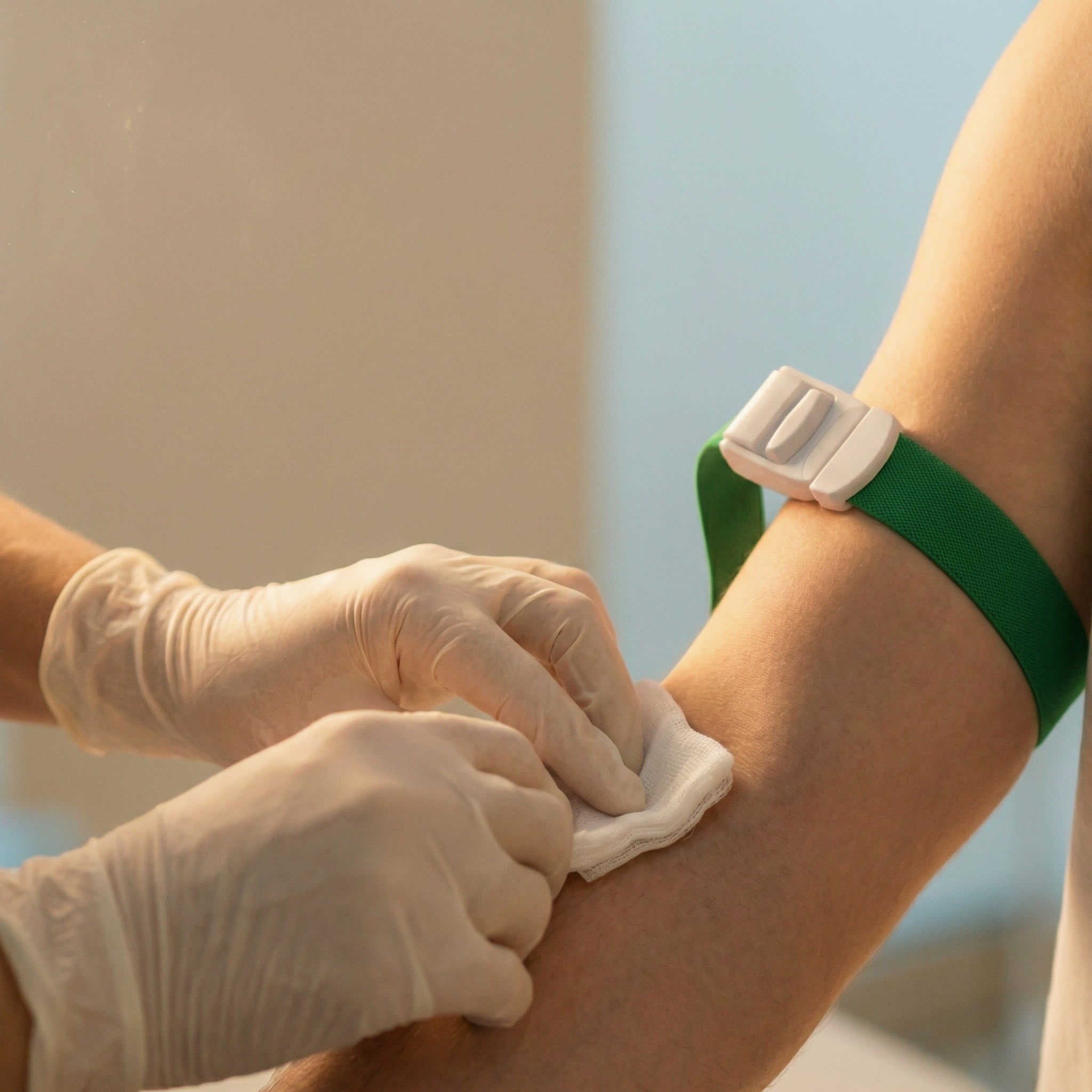
women at blood test

Does your insurance cover your blood test?

Many Swiss supplementary insurers cover part or all of the cost of preventive blood tests. Check in 30 seconds if yours is included.

How it works

Check your coverage

Fill out the form below to find out how much your insurer covers

Book your check-up

Book your preventive health check-up at one of our locations

Submit your invoice

Get your
results

After your check-up, submit your invoice to your insurer

Get reimbursed

Receive your reimbursement according to your coverage

How much will your insurance cover?

Discover all available tests

Discover all available tests

Ahead Health offers a range of imaging scans and blood tests for a better understanding of your health.
~ Shown values are illustrative samples.

How does insurance coverage work for preventive health?

Basic insurance (Grundversicherung)

Mandatory basic insurance (KVG) typically does not cover preventive health screenings like MRI scans or comprehensive blood tests.

KVG

VVG+

Supplementary insurance (Zusatzversicherung)

Many supplementary insurance plans (VVG) cover part or all of the cost of preventive services. Coverage depends on your insurance plan

Basic insurance (Grundversicherung)

Mandatory basic insurance (KVG) typically does not cover preventive health screenings like MRI scans or comprehensive blood tests.

VVG+

KVG

Supplementary insurance (Zusatzversicherung)

Many supplementary insurance plans (VVG) cover part or all of the cost of preventive services. Coverage depends on your insurance plan

Real-world examples

CSS myFlex Premium

CSS supplementary insurance "myFlex Premium" reimburses up to CHF 1'000 of the costs for our MRI and blood packages.

KPT Pulse

Pulse Top and Pulse Premium cover preventive screenings. For MRI-based check-ups, coverage is capped at CHF 1'500 every two years.

Visana

Visana covers 90% of your check-up every three years, up to CHF 600. Blood tests and MRI scans both qualify.

Mivita Reala, Basic, and Intense plans

Atupri reimburses blood tests through Mivita Reala, Basic, and Intense plans. MRI contributions available as a goodwill benefit.


AXA

AXA

AXA COMPLET

AXA reimburses 75% of blood tests and MRI scans — up to CHF 300 per year with ACTIV, or CHF 500 with COMPLET.

Have a different insurance plan?
Your case may still qualify for reimbursement

Learn more about health, longevity,
and the latest in science

EARLY DETECTION

Pancreatic cancer often progresses undetected for a long time – and is therefore frequently diagnosed late. In Switzerland, around 1,500 people are diagnosed each year. Only about 12% survive five years.

There is no standard screening test. Symptoms blend into everyday discomfort. By the time a diagnosis arrives, the cancer has usually already escaped the pancreas.

That picture is starting to shift. Full-body MRI can now detect pancreatic abnormalities before any symptoms appear, giving people – particularly those with elevated risk – a way to act before the disease takes the upper hand.

Nick Lenten

Nick Lenten

27 Mar 2026

EARLY DETECTION

One in three European adults has fatty liver disease. In Switzerland, the picture is similar. Most people have no idea.

The early stages produce few symptoms, sometimes none, and routine check-ups rarely catch it. A standard Grundversicherung appointment doesn't include liver imaging, and basic blood tests often miss early-stage fat accumulation entirely.

That silence is the problem. Undetected, a fatty liver can progress through inflammation, scarring, cirrhosis, and on to liver cancer or organ failure. Caught early, it is largely reversible through lifestyle changes alone.

Here is what fatty liver disease is, who gets it, how it is found, and what to do about it.

Nick Lenten

Nick Lenten

27 Mar 2026

EARLY DETECTION

A standard blood test performed by your GP in Switzerland typically checks a handful of values: a blood count, glucose, a few electrolytes and kreatinine, a basic lipid panel, and a few liver enzymes. The results come back as "normal" or "abnormal," and unless something is flagged, the conversation ends there.

But "normal" is a broad range. A fasting glucose of 5.5 mmol/L is technically normal but sits at the upper boundary, a very different metabolic picture from 4.2 mmol/L. The same applies to cholesterol, inflammation markers, and dozens of other blood biomarkers that most standard panels do not include at all.

For people who want to understand their cardiovascular, metabolic, and inflammatory health in detail, a more comprehensive approach matters. Blood biomarkers are among the most accessible and informative tools in preventive medicine, and the science behind which ones to measure has advanced considerably.

Nick Lenten

Nick Lenten

15 Mar 2026

EARLY DETECTION

Pancreatic cancer often progresses undetected for a long time – and is therefore frequently diagnosed late. In Switzerland, around 1,500 people are diagnosed each year. Only about 12% survive five years.

There is no standard screening test. Symptoms blend into everyday discomfort. By the time a diagnosis arrives, the cancer has usually already escaped the pancreas.

That picture is starting to shift. Full-body MRI can now detect pancreatic abnormalities before any symptoms appear, giving people – particularly those with elevated risk – a way to act before the disease takes the upper hand.

Nick Lenten

Nick Lenten

27 Mar 2026

EARLY DETECTION

One in three European adults has fatty liver disease. In Switzerland, the picture is similar. Most people have no idea.

The early stages produce few symptoms, sometimes none, and routine check-ups rarely catch it. A standard Grundversicherung appointment doesn't include liver imaging, and basic blood tests often miss early-stage fat accumulation entirely.

That silence is the problem. Undetected, a fatty liver can progress through inflammation, scarring, cirrhosis, and on to liver cancer or organ failure. Caught early, it is largely reversible through lifestyle changes alone.

Here is what fatty liver disease is, who gets it, how it is found, and what to do about it.

Nick Lenten

Nick Lenten

27 Mar 2026

EARLY DETECTION

Pancreatic cancer often progresses undetected for a long time – and is therefore frequently diagnosed late. In Switzerland, around 1,500 people are diagnosed each year. Only about 12% survive five years.

There is no standard screening test. Symptoms blend into everyday discomfort. By the time a diagnosis arrives, the cancer has usually already escaped the pancreas.

That picture is starting to shift. Full-body MRI can now detect pancreatic abnormalities before any symptoms appear, giving people – particularly those with elevated risk – a way to act before the disease takes the upper hand.

Nick Lenten

Nick Lenten

27 Mar 2026

EARLY DETECTION

One in three European adults has fatty liver disease. In Switzerland, the picture is similar. Most people have no idea.

The early stages produce few symptoms, sometimes none, and routine check-ups rarely catch it. A standard Grundversicherung appointment doesn't include liver imaging, and basic blood tests often miss early-stage fat accumulation entirely.

That silence is the problem. Undetected, a fatty liver can progress through inflammation, scarring, cirrhosis, and on to liver cancer or organ failure. Caught early, it is largely reversible through lifestyle changes alone.

Here is what fatty liver disease is, who gets it, how it is found, and what to do about it.

Nick Lenten

Nick Lenten

27 Mar 2026

EARLY DETECTION

A standard blood test performed by your GP in Switzerland typically checks a handful of values: a blood count, glucose, a few electrolytes and kreatinine, a basic lipid panel, and a few liver enzymes. The results come back as "normal" or "abnormal," and unless something is flagged, the conversation ends there.

But "normal" is a broad range. A fasting glucose of 5.5 mmol/L is technically normal but sits at the upper boundary, a very different metabolic picture from 4.2 mmol/L. The same applies to cholesterol, inflammation markers, and dozens of other blood biomarkers that most standard panels do not include at all.

For people who want to understand their cardiovascular, metabolic, and inflammatory health in detail, a more comprehensive approach matters. Blood biomarkers are among the most accessible and informative tools in preventive medicine, and the science behind which ones to measure has advanced considerably.

Nick Lenten

Nick Lenten

15 Mar 2026

Frequently asked questions

Frequently asked questions

Does basic insurance cover preventive screenings?

No, mandatory basic insurance (KVG) typically does not cover preventive screenings like MRI or comprehensive blood tests. Supplementary insurance (VVG) is needed for coverage.

Does basic insurance cover preventive screenings?

No, mandatory basic insurance (KVG) typically does not cover preventive screenings like MRI or comprehensive blood tests. Supplementary insurance (VVG) is needed for coverage.

How do I submit my invoice to my insurer?

After your check-up, you'll receive a pro-forma invoice. Submit it through your insurer's online portal or app. Reimbursement typically takes 2–4 weeks.

How do I submit my invoice to my insurer?

After your check-up, you'll receive a pro-forma invoice. Submit it through your insurer's online portal or app. Reimbursement typically takes 2–4 weeks.

How long does reimbursement take?

Most insurers reimburse within 2–4 weeks after invoice submission.

How long does reimbursement take?

Most insurers reimburse within 2–4 weeks after invoice submission.

Is my data safe?

Yes. We process your data in compliance with GDPR and use it exclusively to check your insurance coverage. See our privacy policy for details.

Is my data safe?

Yes. We process your data in compliance with GDPR and use it exclusively to check your insurance coverage. See our privacy policy for details.

What if my insurer isn't listed?

No problem — select 'Other' in the Insurance form and we'll manually research your coverage. You'll hear back within 24 hours.

What if my insurer isn't listed?

No problem — select 'Other' in the Insurance form and we'll manually research your coverage. You'll hear back within 24 hours.

Which supplementary insurers cover Ahead Health?

Many Swiss supplementary insurers cover part or all of the blood test cost. For MRI, reimbursement is usually more limited — KPT is the most forward-thinking, covering up to CHF 1,500 per year (Pulse Premium). Fill out our form and we'll check your individual coverage.

Which supplementary insurers cover Ahead Health?

Many Swiss supplementary insurers cover part or all of the blood test cost. For MRI, reimbursement is usually more limited — KPT is the most forward-thinking, covering up to CHF 1,500 per year (Pulse Premium). Fill out our form and we'll check your individual coverage.

Will I receive an invoice that I can submit to my insurance?

You will receive an invoice clearly outlining the provided services and the centre/clinic that provided the services. Please check with your insurer if you require a different documentation.

Will I receive an invoice that I can submit to my insurance?

You will receive an invoice clearly outlining the provided services and the centre/clinic that provided the services. Please check with your insurer if you require a different documentation.

Ready for your check-up?

One visit. A clear picture. And a plan for what comes next

Ready for your check-up?

One visit. A clear picture. And a plan for what comes next