Blood biomarkers explained: what they reveal
15 March 2026



A standard blood test performed by your GP in Switzerland typically checks a handful of values : a blood count, glucose, a few electrolytes and kreatinine, a basic lipid panel, and a few liver enzymes. The results come back as "normal" or "abnormal," and unless something is flagged, the conversation ends there.
But "normal" is a broad range. A fasting glucose of 5.5 mmol/L is technically normal but sits at the upper boundary, a very different metabolic picture from 4.2 mmol/L. The same applies to cholesterol, inflammation markers, and dozens of other blood biomarkers that most standard panels do not include at all.
For people who want to understand their cardiovascular, metabolic, and inflammatory health in detail, a more comprehensive approach matters. Blood biomarkers are among the most accessible and informative tools in preventive medicine, and the science behind which ones to measure has advanced considerably.
What are blood biomarkers?
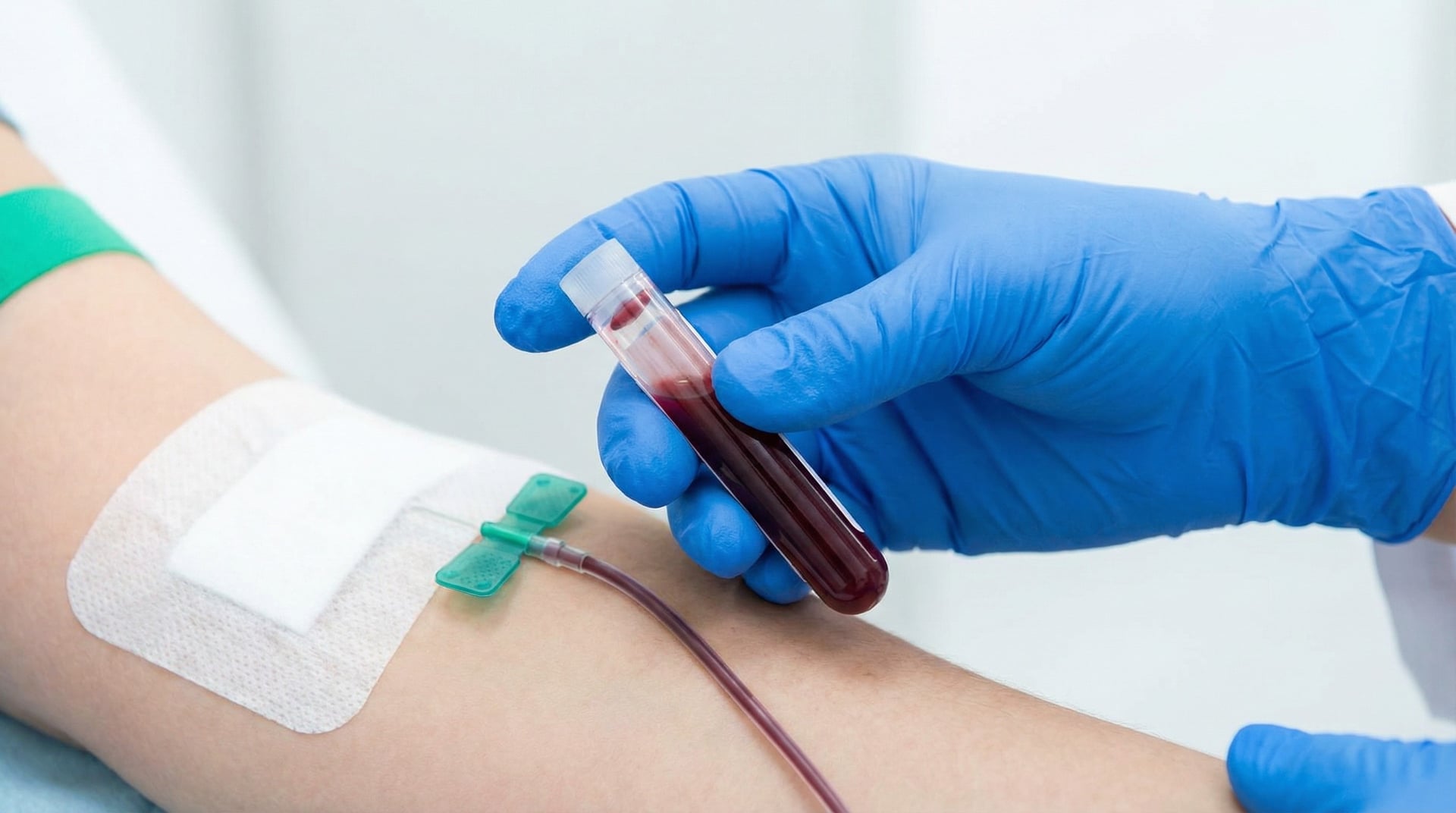
A biomarker is any measurable substance in your body that reflects or indicates a biological process, a disease state, or a response to a treatment. Blood biomarkers specifically are molecules, proteins, hormones, or metabolites circulating in your bloodstream that can be quantified from a simple blood draw.
Some are familiar: cholesterol, blood sugar (glucose), vitamin D. Others are less well-known but increasingly central to cardiovascular and metabolic risk assessment, such as ApoB, hsCRP, and insulin.
The value of blood biomarkers lies in their ability to detect risk before symptoms appear. Elevated insulin resistance can develop silently for years. A rising ApoB concentration may signal arterial risk decades before a cardiac event. These signals are detectable in blood long before they become visible in any other way.
The biomarkers that matter for metabolic health
HbA1c: your three-month blood sugar average
Fasting glucose measures blood sugar at a single point in time. HbA1c reflects your average blood sugar over the past 8 to 12 weeks by measuring the percentage of haemoglobin molecules coated with glucose. It is the standard marker for diagnosing and monitoring diabetes, and the best early signal for pre-diabetes.
An HbA1c below 5.7% is considered normal. Between 5.7% and 6.4% indicates pre-diabetes. Above 6.5% is diagnostic for type 2 diabetes. The Swiss Diabetes Association estimates around 500,000 people in Switzerland live with diabetes, many undiagnosed.
The distinction between 5.2% and 5.6% matters. Both are "normal," but the trajectory tells you whether your metabolic health is stable or drifting.
Fasting insulin
Here is something most GPs do not test : fasting insulin. Your body can maintain normal blood sugar for years by producing more and more insulin to compensate for growing cellular resistance. By the time glucose or HbA1c rises out of range, your pancreas may have been overworking for a decade.
Measuring fasting insulin alongside glucose gives you the HOMA-IR index, a validated estimate of insulin resistance. It is one of the earliest detectable metabolic changes and a powerful predictor of type 2 diabetes and cardiovascular disease.

The biomarkers that matter for cardiovascular health
ApoB: the particle that builds plaque
Every atherogenic lipoprotein, the kind that deposits cholesterol in your artery walls, carries one apolipoprotein B molecule. This makes ApoB a direct count of dangerous particles in your blood, and many cardiologists now consider it a superior risk marker to LDL cholesterol.
The European Atherosclerosis Society has positioned ApoB as a key target in dyslipidaemia management. Two people with identical LDL values can have very different ApoB levels, which means very different cardiovascular risk profiles. If you measure only LDL, you may miss the full picture.
Lipid panel: beyond total cholesterol
A comprehensive lipid panel includes total cholesterol, LDL, HDL, triglycerides, and ideally also non-HDL cholesterol and the LDL/HDL ratio. These are among the most established cardiovascular risk markers in medicine.
In Switzerland, cardiovascular disease is the leading cause of death, accounting for around 30% of all deaths according to the Swiss Federal Statistical Office . A detailed lipid panel, measured regularly, provides the clearest available window into your arterial risk trajectory.
Lp(a): the genetic risk marker
Lipoprotein(a) is genetically determined and largely resistant to lifestyle modification. About 20% of the European population carries elevated Lp(a) levels, which independently increase the risk of coronary artery disease and aortic valve stenosis.
It is often suffucient to measure Lp(a) only once in a lifetime as it rarely changes significantly. If your level is elevated, it shifts the risk calculus and may justify earlier or more aggressive lipid management. Most standard Swiss blood panels do not include it.
The biomarkers that matter for inflammation
hsCRP: the quiet alarm
High-sensitivity C-reactive protein measures systemic low-grade inflammation. It is produced by the liver in response to inflammatory signals from anywhere in the body. In cardiovascular medicine, it has been validated as an independent predictor of heart attack and stroke, even when cholesterol is normal.
The JUPITER trial demonstrated that statin therapy in patients with normal LDL but elevated hsCRP significantly reduced cardiovascular events. This helped establish hsCRP as a standalone risk marker, and it is now included in several international cardiovascular risk models.
A single elevated hsCRP reading may reflect a recent infection or acute injury. A persistently elevated level, particularly above 3 mg/L, warrants investigation.
What a standard Swiss blood test misses
A typical GP blood test in Switzerland , ordered as part of a routine check-up or triggered by symptoms, may include glucose, total cholesterol, HDL, LDL, triglycerides, liver enzymes (ALT, AST), kidney function (creatinine, eGFR), thyroid (TSH), and a complete blood count.
What it typically does not include: ApoB, Lp(a), fasting insulin, hsCRP, HbA1c (unless diabetes is suspected), vitamin D, ferritin, omega-3 index, and a range of other markers that provide meaningful context for cardiovascular, metabolic, and inflammatory health.
| Marker | Standard GP panel | Ahead advanced panel (81 biomarkers) |
|---|---|---|
| Fasting glucose | Yes | Yes |
| HbA1c | Sometimes | Yes |
| Fasting insulin | Rarely | Yes |
| Total cholesterol / LDL / HDL | Yes | Yes |
| ApoB | No | Yes |
| Lp(a) | No | Yes |
| hsCRP | No | Yes |
| Vitamin D | Sometimes | Yes |
| Ferritin / iron studies | Sometimes | Yes |
| Thyroid (full panel) | TSH only | TSH, fT3, fT4 |
The gap is not a criticism of GPs. Standard panels are designed for symptomatic care and population-level screening. A comprehensive panel is designed for people who want a deeper understanding of their individual risk profile.
How Ahead Health measures your blood biomarkers
Ahead's Advanced blood test tests 80+ biomarkers across metabolic, cardiovascular, inflammatory, hormonal, and nutritional categories. The blood draw takes a few minutes and is done at one of Ahead's partner clinics across Switzerland.
Results come as an interactive digital report, reviewed by a Swiss board-certified physician, with each marker explained in context rather than as an isolated number. If a finding warrants follow-up, the physician flags it and recommends a path forward with your GP.
The blood panel is included in the Ahead Advanced package (CHF 2,490), which also includes a full-body MRI. For a broader baseline that includes brain analysis, hips and knee screening, vitamin and hormonal blood panels, Ahead Pro (CHF 3,549) extends the assessment further.
Supplementary health insurers may cover part of the cost. KPT, CSS, AXA, Visana and Atupri are all reimbursing part of the cost for Ahead Health services depending on their T&Cs, some with up to CHF 1,500. You can check how much you can get reimbursed and request a pro-forma invoice on our insurance page .
Conclusion
Blood biomarkers are one of the most powerful tools in preventive medicine, but their value depends entirely on which ones you measure and how you interpret them. A standard panel provides a useful baseline. A comprehensive panel, combined with imaging, gives you a dataset that can detect metabolic, cardiovascular, and inflammatory risk years before symptoms appear.
The question is straightforward: do you want to know where you stand, or do you want to wait until something forces the question?
Frequently asked questions

CEO
First employee, CTO, and CMO at Coolblue, contributing to a 1B+ exit. Former product executive at Google for Flights and Shopping, and CCO at Suitsupply, overseeing DTC growth with 100+ stores. Recently incubated the consumer healthtech company, Everyman.