From PCOS to PMOS: why medicine is renaming a commonly misunderstood condition
22 May 2026


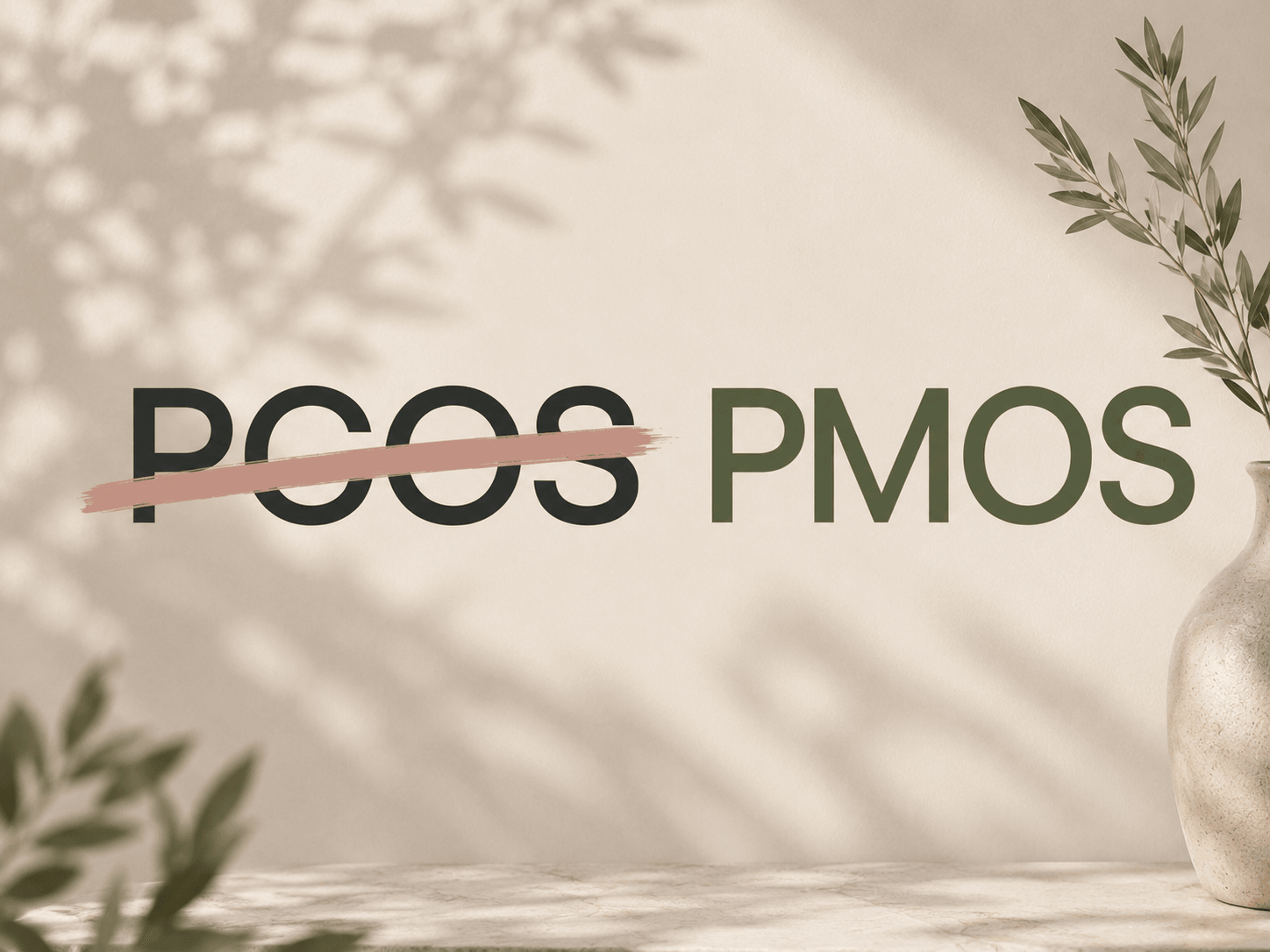
For decades, the diagnosis of polycystic ovary syndrome carried a name that never quite fit. Most women who receive the diagnosis have follicles, not cysts. The "polycystic" appearance of their ovaries on ultrasound — that ring of small follicles — is not a disease in itself, but a finding. And yet the name stuck, shaping for more than 80 years how millions of women, their doctors and researchers understand the condition.
That has now changed. On 12 May 2026, polycystic ovary syndrome (PCOS) was officially renamed polyendocrine metabolic ovarian syndrome (PMOS), following a major international consensus published in The Lancet in early 2026. It sounds like a small administrative change. It isn't.
Why the name 'PCOS' no longer fits
The term polycystic ovary syndrome was coined in 1935, when the condition was first described as Stein-Leventhal syndrome. At the time, enlarged ovaries with multiple follicles were the defining observable feature, and the name followed the anatomy.
The problem is that medicine has moved on. Today we understand PCOS primarily as a hormonal and metabolic condition, characterised by excess androgen production, irregular or absent ovulation and disrupted menstrual cycles. Ovarian morphology is one possible feature among several, not the condition itself. Crucially, around 20 to 30 per cent of women with otherwise normal hormone levels and regular cycles show the same "polycystic" appearance on ultrasound. At the same time, some women who fully meet the diagnostic criteria for PCOS show no polycystic appearance at all.
What PMOS is, and what the change means
The new name, polyendocrine metabolic ovarian syndrome, shifts the focus from an isolated ovarian disorder to a multi-system syndrome with neuroendocrine, metabolic and reproductive features.
The renaming goes beyond word choice, though. The diagnostic criteria set out in Rotterdam in 2003, which require at least two of the following (irregular or absent menstrual cycles, clinical or biochemical androgenism, and ovarian cysts visible on ultrasound), remain valid. The new name is intended to improve timely diagnosis, broaden treatment options, reduce stigma, drive research and funding, and help women better understand their symptoms.
Why diagnosis takes longer than it should
PCOS is one of the most common hormonal conditions in women of reproductive age, with estimates of around one in ten women worldwide. Across Europe, the condition remains significantly underdiagnosed. Studies suggest that up to 70 per cent of affected women may not have received a formal diagnosis by the time they seek medical help for their symptoms.
Part of the cause lies in the breadth of symptoms. PCOS can present differently from woman to woman. Some experience irregular or absent periods, others have acne, excessive facial or body hair growth, or hair loss. Many struggle to control their weight or show signs of insulin resistance. Some have all of these symptoms, others only one or two.
The name has not helped. "Ovarian syndrome" anchors the condition in gynaecology, even though much of the burden — insulin resistance, cardiovascular risk and metabolic dysregulation — lies elsewhere in the body. Studies have shown that women with PCOS have raised long-term risks of type 2 diabetes, cardiovascular disease, endometrial cancer and mental health conditions such as anxiety and depression. A name that points only to the ovaries underestimates the systemic nature of what's happening and delays comprehensive treatment.
The stigma a name carries
Names don't just describe; they also shape how patients are treated and how they understand themselves. Research into the patient experience of PCOS has repeatedly shown that the word "cysts" is one of the first things women fixate on after diagnosis. It suggests that something is specifically wrong with the ovaries — something that could affect fertility, something with broader implications than "a hormonal pattern that can be treated."
This can lead to unnecessary worry about the ovaries and draws attention away from the factors that actually most influence long-term wellbeing: metabolic function, cycle regularity and hormonal balance.
There is also a subtler effect. When a condition sounds primarily structural and gynaecological, it tends to be referred to gynaecologists and treated symptom by symptom. The acne is treated by the dermatologist, irregular periods are controlled with hormonal contraception, weight problems are referred to a dietitian. The systemic overall picture, which requires coordinated care across endocrinology, nutrition and sometimes cardiology, can get lost in the referral chain.
A name that reflects what the condition actually is — a reproductive and metabolic disorder driven largely by androgen excess and disrupted insulin signalling — could change this pattern.
What this means for women in the Netherlands
For women in the Netherlands who receive a PMOS diagnosis, or suspect they have one, the practical reality is that a thorough assessment goes beyond what a standard examination typically covers. A GP consultation can make a tentative diagnosis and initiate a referral, but a thorough assessment requires blood tests that go beyond the basic hormone panels usually ordered in a standard examination.
The most informative markers include total and free testosterone, SHBG (sex hormone-binding globulin), LH and FSH, AMH (anti-Müllerian hormone), fasting glucose, fasting insulin and a full lipid panel. Together they give a picture of both the hormonal pattern and the metabolic risk, the two axes that most determine long-term outcomes. An ultrasound to assess ovarian morphology is one piece of the puzzle, not the whole picture.
Understanding which markers are relevant and what your results actually mean is often the real gap. A comprehensive blood panel, going well beyond what an annual standard examination includes, is the starting point for anyone who wants to understand what's driving their symptoms rather than treating them one at a time.
How Ahead approaches hormonal and metabolic health
For women who want a clearer picture of their hormonal and metabolic status, Ahead's advanced blood panel with hormone add-on includes the markers most relevant to a PCOS assessment: testosterone (total and free), SHBG, LH, FSH, fasting glucose, fasting insulin and a full lipid panel, complemented by more than 80 further biomarkers covering thyroid function, inflammation and nutrient status.
This is also included in the Ahead Pro package, which combines the blood panel with a head-to-knee MRI and a personalised health report reviewed by a physician. Results are assessed in the context of your overall picture, not as isolated individual values — exactly the kind of holistic assessment that brings hormonal, metabolic and structural findings together into one picture. (Local NL pricing to be inserted.)
Ahead's services are designed to complement your GP and any specialists, not replace them. Supplementary insurance may cover part of the cost.
The bigger argument: naming shapes understanding
At its core, the debate about renaming PCOS to PMOS is about what medicine owes its patients in terms of accuracy. A diagnosis should be the framework through which a person understands their own body over years, sometimes decades. When that framework is built on a misleading word, the downstream effects are real: unnecessary worry, misdirected treatment and fragmented care.
The researchers behind the Lancet consensus argued that better language is part of better medicine. That the name a condition carries influences how it is taught in medical schools, how patients describe their symptoms, how insurers code it and how scientists frame their research questions.
It is a slower kind of change than a new drug or a better scan. But for the estimated one in ten women living with this condition, it could be one of the more meaningful changes in how she is perceived and heard.
Bottom line
The shift from PCOS to PMOS is not simply the update of an acronym. It is an argument that the words medicine uses matter, that a more accurate name can change how a condition is explained, how patients understand it, and how it is ultimately treated. Whether the renaming is fully adopted worldwide depends on clinical bodies, medical schools and the machinery of diagnostic consensus. But the direction is now set.
Sources
1. Endometriosis UK — PCOS officially renamed PMOS (2026).
2. Rotterdam ESHRE/ASRM-Sponsored PCOS Consensus Workshop Group. "Revised 2003 consensus on diagnostic criteria and long-term health risks related to polycystic ovary syndrome." * Fertility and Sterility *, 2004.
https://www.fertstert.org/article/S0015-0282(03)02853-X/fulltext
3. Bozdag G, et al. "The prevalence and phenotypic features of polycystic ovary syndrome: a systematic review and meta-analysis." * Human Reproduction *, 2016.
https://academic.oup.com/humrep/article/31/12/2841/2274353
4. Azziz R, et al. "Polycystic ovary syndrome." * Nature Reviews Disease Primers *, 2016.
https://www.nature.com/articles/nrdp201657
5. Eslam M, et al. "A new definition for metabolic dysfunction-associated fatty liver disease: An international expert consensus statement." * Journal of Hepatology *, 2020.
https://www.journal-of-hepatology.eu/article/S0168-8278(20)30201-4/fulltext
6. European Society of Human Reproduction and Embryology (ESHRE) — PCOS guidelines.
https://www.eshre.eu/Guidelines-and-Legal/Guidelines/Polycystic-Ovary-Syndrome
7. March WA, Moore VM, Willson KJ, Phillips DIW, Norman RJ, Davies MJ. "The prevalence of polycystic ovary syndrome in a community sample assessed under contrasting diagnostic criteria." * Human Reproduction *, 2010; 25(2): 544–551.
Frequently asked questions

Growth Lead
Led commercial and strategy projects in Life Sciences and Global Public Health at McKinsey & Company, including work across commercial due diligence, market access, and growth strategies. Holds a Master's in Banking and Finance from the University of St. Gallen with a focus on data science and quantitative methods.