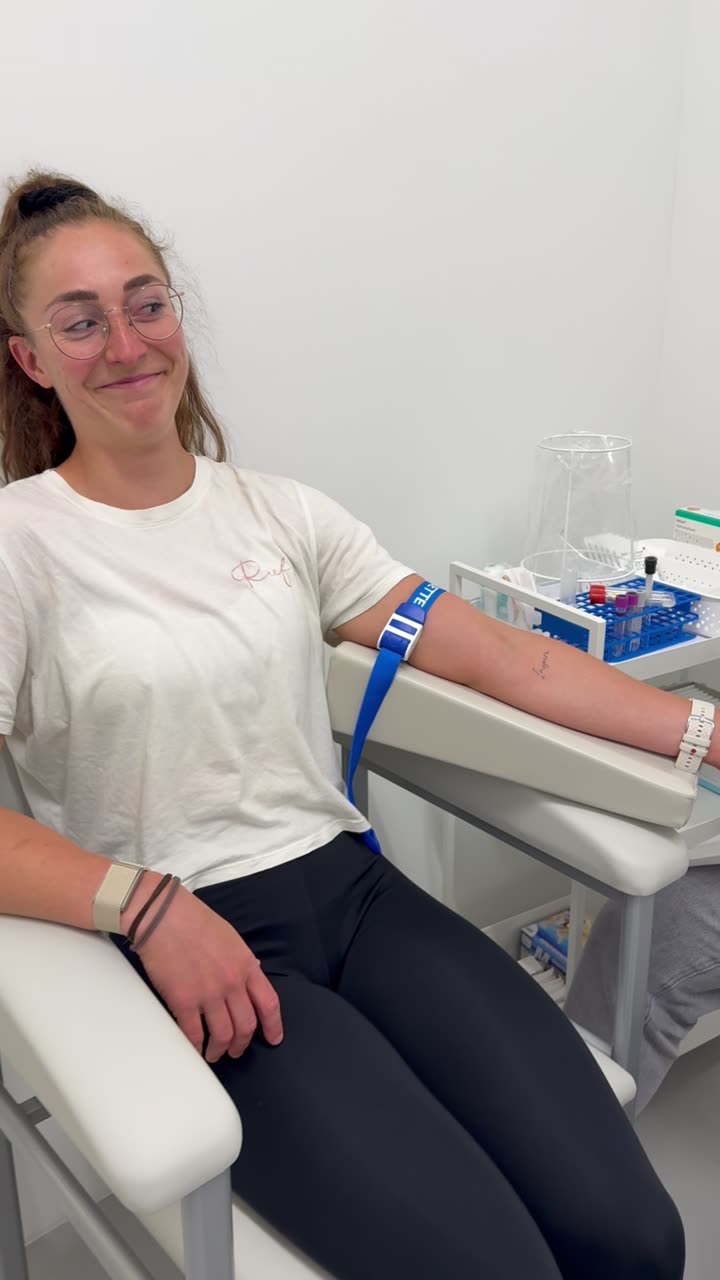
Cortisol blood test
Cortisol is a hormone with one of the body's strongest daily rhythms, peaking in the early morning. Measuring it with a morning blood draw, at its natural peak, gives a clear, comparable reading your doctor can interpret.
Reviewed by physicians
Personal action plan
Interactive report
What you will get
- Assesses your adrenal (cortisol) function
- Measured in the morning, at cortisol's natural peak, for a reliable baseline
- Insights from leading European physicians
- A detailed report with long-term trends and a personal action plan
- Health areasAdrenal function, Hormones, Metabolism
- Time neededIncluded in blood draw, no extra time
- RadiationNone at all
- Contrast dyeNone at all
- PreparationBlood draw should be performed in the morning (before 10 AM).
- For whomPeople looking into symptoms like unexplained fatigue, alongside their doctor
Why measure it
A morning reading you can actually interpret
1 draw
Measured at cortisol's natural morning peak, alongside your Advanced blood test.
A clear morning baseline
Taken at cortisol's daily peak, a morning reading gives your doctor a reliable, comparable starting point.
Timing is what makes it meaningful
Cortisol rises and falls through the day, so a morning draw against a reference range is what lets the number be read correctly.
Who is it for?
Who might consider a cortisol test
A cortisol reading can be a useful part of the picture if you have symptoms worth investigating, or want a fuller view of your hormones. It is a starting point, not a diagnosis.
Unexplained fatigue or weight changes
Ongoing tiredness or weight changes without a clear cause can be worth raising with your doctor.
Sleep or energy that feels off
Disrupted sleep or energy dips are common reasons people look at their hormones more closely.
A fuller hormone picture
Anyone who wants cortisol included as part of a broader blood panel.
Guided by your doctor
A symptom or earlier result your doctor wants to look into with a cortisol reading.
Why standard tests miss it
Why a standard panel does not tell you this
A standard blood panel does not include cortisol. And because cortisol rises and falls through the day, a reading only means something when it is taken in the morning, at its natural peak, and read against a reference range. A sample at the wrong time is easy to misread.
Cholesterol, total
Cholesterol, total
HDL cholesterol
HDL cholesterol
Triglycerides
Triglycerides
Cortisol
Cortisol
Cholesterol, total
Cholesterol, total
HDL cholesterol
HDL cholesterol
Triglycerides
Triglycerides
Cortisol
Cortisol

What a result gives you
A number your doctor can work with
A morning cortisol result is a starting point, not a diagnosis. Read alongside your symptoms and the rest of your panel, it helps your doctor decide whether anything needs a closer look. A healthy result is a strong morning level, not a low one, and a low reading can matter as much as a high one.
A clear starting point
A morning baseline your doctor can interpret together with your symptoms.
A prompt for the right follow-up
An unusual result can be the trigger for the confirmatory tests that a diagnosis actually needs.
Track it over time
Repeat readings show how your levels change across your check-ups.
Context for your care
Your cortisol adds to the full-body picture your Advanced blood test builds.
How it works
From booking to your baseline in days

Step 01
Book online
Choose the Advanced blood test and add cortisol at the add-on step.

Step 02
A morning blood draw
Visit a partner lab in the morning, when cortisol is at its natural peak.

Step 03
Your clear digital report
See your morning cortisol level, what it means, and exactly what to do next.

One-off blood test
A single test to set your baseline · 30 min
A comprehensive blood panel of 74 biomarkers covering cardiovascular risk, liver and kidney function, immune status, inflammation, and Vitamin D. Designed to go deeper than a standard check-up.

Cortisol
Know your morning cortisol baseline
Add cortisol to your Advanced blood test for a clear morning reading of this key hormone, interpreted by leading European physicians.