Skip to content
See your health improve
Blood disordersDetected by blood test

Aplastic anemia

A rare condition where the bone marrow fails to produce enough blood cells. Blood testing detects simultaneous decreases in red cells, white cells and platelets, prompting urgent further investigation.
Early detection matters

Our comprehensive check-up screens for aplastic anemia and hundreds of other conditions.

Related biomarkers we test

Neutrophils (abs.)

The absolute count of neutrophils per liter of blood. While neutrophil percentage shows the proportion among white blood cells, the absolute count reveals the actual number available to fight infections. This is clinically essential, because a normal percentage can mask a dangerously low absolute count if total white blood cells are reduced.

Lymphocytes (abs.)

The absolute count of lymphocytes per liter of blood. Lymphocytes include T cells and B cells — the cornerstone of adaptive immunity — as well as natural killer (NK) cells, which provide innate immune defense. The absolute count is critical for assessing immune competence, as a normal percentage can hide true lymphopenia when total white blood cells are low.

Thrombocytes (platelets)

Platelets (thrombocytes) are blood cells essential for blood clotting. When vessel damage occurs, they adhere to injury sites and initiate the coagulation cascade to prevent excessive bleeding.

Neutrophils

Neutrophils (primary bacterial fighters) respond rapidly to acute infections.

Leukocytes

Leukocytes, also known as white blood cells, are crucial for immune system function: the total white blood cell count measures overall immune activity, while differential testing examines specific cell types.

Mean corpuscular volume (MCV)

Mean Corpuscular Volume measures the average size of red blood cells. It helps diagnose different types of anemia - elevated in macrocytic anemia, decreased in microcytic anemia, and normal in normocytic anemia.

Hemoglobin

Hemoglobin is a protein in red blood cells that binds to oxygen in the lungs and delivers it to tissues throughout the body. It also plays a role in transporting carbon dioxide back to the lungs for exhalation.

Hematocrit

Hematocrit measures the percentage of blood volume occupied by cellular components, with the largest portion being red blood cells (erythrocytes). When blood is centrifuged, blood cells settle at the bottom, creating a visible layer that indicates their proportion relative to total blood volume.

Erythrocytes

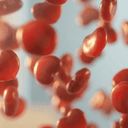
Red blood cells (erythrocytes) are the most abundant blood cells and carry oxygen from lungs to tissues throughout the body via hemoglobin. They have a biconcave disc shape that maximizes surface area for gas exchange.

Related conditions in Blood disorders