
PSA blood test
The prostate-specific antigen (PSA) is a protein produced by the prostate gland. Elevated blood levels can point to prostate cancer, benign enlargement (BPH), or inflammation. A single raised value is not a diagnosis: benign causes lift it too, so PSA means most when it is tracked over time and, if raised, read alongside an MRI before anything invasive.
Reviewed by Swiss physicians
Personal action plan
Interactive report
What you will get
- Early detection of prostate cancer
- A baseline for long-term monitoring
- Detailed health report with long-term trends
- Add additional tests or MRI imaging anytime
- Health areasProstate, Men's Health
- Time neededIncluded in blood draw, no extra time
- RadiationNone at all
- Contrast dyeNone at all
- PreparationAvoid vigorous exercise and sexual activity 48 hours before the test.
- For whomMen aged 45+ (or 40+ with family history)
Who it's for
Early detection, and a baseline you can track over time
Men 45+
Worth considering from 45, or from 40 with a family history of prostate cancer.
Men 45 and older
The routine age to consider your first PSA test, whether or not you have symptoms.
A family history
A father or brother with prostate cancer brings the starting age forward to 40.
Urinary or prostate symptoms
Men with urinary symptoms or specific prostate concerns worth investigating.
A low result buys you years
If your PSA is low, guidelines support waiting years before testing again, up to eight. You get reassurance now and a baseline to track later.
What a raised result means
What a raised PSA can point to
PSA is a sensitive signal but not a specific one: a raised level flags that your prostate is worth a closer look, but most raised results come from common, harmless causes, not cancer. That is manageable when you know what comes next, which is what modern prostate care is built around.
Prostate cancer
The reason the test exists. A raised PSA can be an early sign, though most raised results turn out not to be cancer.
Benign enlargement (BPH)
A very common, non-cancerous growth of the prostate with age. It lifts PSA without being cancer.
Inflammation (prostatitis)
Infection or inflammation of the prostate can raise PSA, often only for a while.
A temporary spike
Recent ejaculation, hard cycling or a urinary infection can each push PSA up temporarily, which is why timing and a repeat test matter.
Why standard tests miss it
Why a standard panel does not tell you this
A standard blood panel does not include PSA. It has to be requested on its own, which is why many men have never had it measured. And because a single reading is only a triage signal, PSA means most when it is tracked over time and, if raised, read alongside an MRI.
Cholesterol, total
Cholesterol, total
HDL cholesterol
HDL cholesterol
Triglycerides
Triglycerides
PSA
PSA

Cholesterol, total
Cholesterol, total
HDL cholesterol
HDL cholesterol
Triglycerides
Triglycerides
PSA
PSA

If your PSA is raised
A clear path, not a leap to biopsy
A raised PSA is a starting point, not a verdict. The next step is an MRI, not a biopsy. Modern prostate care rules things out step by step, so many men avoid an unnecessary biopsy.
Confirm and contextualise
Often a repeat test, plus free-to-total PSA or PSA density, to see whether the result holds up.
MRI before biopsy
An MRI scan looks at the prostate first. It catches most significant cancers and safely spares many men a biopsy.
Targeted biopsy only if needed
If the MRI flags a suspicious area, a targeted biopsy confirms it. It stays the only way to be certain.
Watch, or treat
Many low-risk cancers are safely monitored rather than treated straight away. Your care is decided with a specialist.
How it works
From booking to your number in days

Step 01
Book online
Add PSA to your Advanced blood test and pick a time and place that suit you.
Step 02
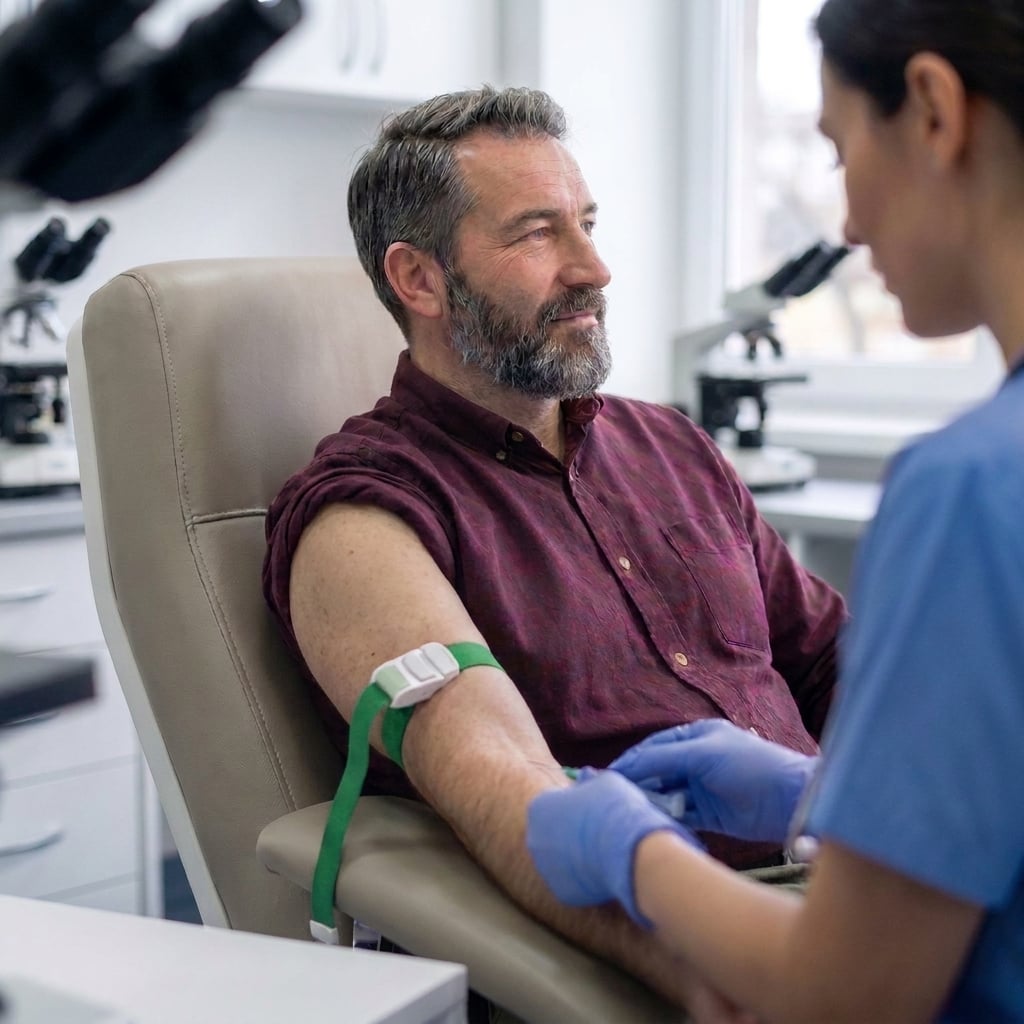
Give a blood sample
A quick draw at a partner location. Avoid vigorous exercise and sexual activity for 48 hours before.

Step 03
Get your report
Your PSA result in a clear report with long-term trends, plus a personal action plan and Swiss physician insight.

Real stories
Men who decided to know their number
Every health journey is unique. Read how others took control of their health with Ahead.
Ahead membership
Recurring care
An annual membership built for tracking: the full 80+ biomarker blood test each year, follow-up tests in between, doctor-reviewed reports with an action plan, and member pricing on every scan and add-on.

One-off blood test
A single test to set your baseline · 30 min
A comprehensive blood panel of 81 biomarkers covering cardiovascular risk, liver and kidney function, immune status, inflammation, and Vitamin D. Designed to go deeper than a standard check-up.

Common questions
What preparation is needed?+
<p>Detailed preparation guidelines will be provided after your booking is confirmed, usually via a calendar invitation. General preparations include:</p> <ul> <li>Fasting: If your check-up includes blood tests, an 8–12 hour fast (water is okay) is recommended. Please confirm specific requirements for your booked package.</li> <li>Attire: You can wear comfortable clothes. At the check-up appointment you will receive comfortable scrubs.</li> <li>Hydration: Drink 2–3 glasses (about 500ml) of water before your scan to stay hydrated.</li> <li>Exercise: Avoid heavy exercise for about 2 hours before your scan. If you have a blood test, avoid heavy exercise about 24 hours before.</li> <li>Metal: Do not wear any metal items such as jewelry or watches. If you have any metal implants, please inform us.</li> <li>Caffeine: If you are prone to jitters, avoid caffeine for at least 2 hours before the scan. If you booked a blood test, stay fasted and avoid caffeine on the day of your scan.</li> <li>Medication: Continue taking your regular medications unless your GP has advised otherwise.</li> </ul>
How fast will I get my results?+
<p>Blood test results are typically available within 5–7 business days after your blood draw. You'll receive a notification when your interactive report is ready in the Ahead portal.</p> <p>If you booked a combined check-up (MRI + blood), both sets of results are delivered together in a single report. If you booked the <a href="/tests/omega-blood-test">Omega-3 & 6 add-on</a>, the analysis may take longer, so your combined report may take up to 10 business days.</p> <p>Once your results are ready, you can schedule a follow-up consultation with one of our physicians to discuss them in detail. This consultation is included in the price of check-up packages. See our <a href="/report">sample report</a> to get an idea of what to expect.</p>
Do I need to fast before a blood test?+
<p>Yes. We recommend fasting for 8–12 hours before your blood draw (water is fine and encouraged). This ensures accurate results for fasting glucose, insulin, triglycerides, and other metabolic markers.</p> <p>During the fasting period:</p> <ul> <li>Drink 2–3 glasses of water to stay well hydrated (this also makes the blood draw easier)</li> <li>Avoid food, coffee, tea, juice, and other beverages besides water</li> <li>Continue taking any prescribed medications unless your doctor advises otherwise</li> <li>Avoid intense exercise for 24 hours before the test</li> </ul> <p>If you have a morning appointment, the easiest approach is to stop eating after dinner the night before and drink water in the morning.</p> <p>If fasting isn't possible for medical reasons (e.g. diabetes), please let us know when booking and we'll advise on the best approach.</p>
What is the difference between your blood test and a standard GP blood test?+
<p>A standard GP blood test in Switzerland typically covers a basic panel: blood count, cholesterol, blood sugar, and sometimes liver and kidney values. It usually includes 10–15 markers and is ordered reactively when symptoms are present.</p> <p>The Ahead <a href="/tests/advanced-blood-test">Advanced blood test</a> is a preventive screening panel with 80+ biomarkers designed to catch early warning signs before symptoms appear. Key differences:</p> <ul> <li><strong>Broader scope:</strong> we include cardiovascular risk markers (ApoB, hs-CRP), metabolic health (HbA1c, HOMA-IR, Insulin), a full thyroid panel (TSH, fT3, fT4), and more, most of which are not part of a routine GP check.</li> <li><strong>Proactive approach:</strong> our panel is designed for preventive screening of healthy individuals, not diagnosis of existing symptoms.</li> <li><strong>Detailed reporting:</strong> your results come in an interactive online report with clear reference ranges, trend tracking, and personalized recommendations.</li> <li><strong>Physician review:</strong> every result is reviewed by a physician who can explain findings and suggest next steps. A follow-up consultation is included with check-up packages.</li> <li><strong>Optional add-ons:</strong> you can extend your panel with <a href="/tests/hormone-blood-test-women">hormones (women)</a> / <a href="/tests/hormone-blood-test-men">hormones (men)</a>, <a href="/tests/essential-b-vitamins-test">B-vitamins</a>, or <a href="/tests/omega-blood-test">Omega-3 & 6</a>.</li> </ul> <p>For a deeper comparison, see our article on <a href="/insights/check-up-blood-test-vs-preventive-blood-test-what-is-the-real-difference">how a preventive blood test compares to a standard check-up</a>. You can also explore the <a href="/biomarkers">full list of biomarkers we test</a>.</p>
Should I stop taking supplements before my blood test?+
<p>No — please continue taking your medications and supplements as usual. This allows us to assess your health in the context of your real-life routine.</p> <p>Please include what you take and the dosage in your questionnaire so our medical team can interpret your results accurately.</p> <p>Please note:</p> <ul> <li>Creatine: may influence markers related to kidney function — please mention it in your questionnaire - Thyroid medication: please pause it 2 hours before your appointment</li> </ul>

Know your number
Take the guesswork out of prostate health
One simple blood test, tracked over time and read alongside MRI when it counts. Add PSA to your Advanced blood test today.