We're live in 6 cities | Coming soon to more EU locations Join waitlist
We're live in 6 cities | Coming soon to more EU locations Join waitlist
We're live in 6 cities | Coming soon to more EU locations Join waitlist
Biomarkers included in
our body composition
Biomarkers included in the
body composition
Biomarkers included in
our body composition
Our MRI-based body composition gives you more clarity on important health markers and flags signals worth a closer look.
The Ahead Health check-up can show signs of certain diseases but is not conclusive or definitive for all conditions, may require follow-up tests, and does not replace other medical check-ups.
FILTER BY PACKAGE
Compare packages
FILTER BY PACKAGE
Compare packages
Metabolism
Abdominal fat ratio
The proportion of abdominal fat relative to total body fat. This measurement helps assess fat distribution patterns, which can be more clinically relevant than total fat alone. Higher abdominal fat ratios are associated with increased metabolic and cardiovascular risks.
Abdominal subcutaneous adipose tissue (ASAT)
Fat stored beneath the skin in the abdominal region. While still contributing to overall adiposity, ASAT is generally considered less metabolically harmful than visceral fat. However, excessive ASAT can still contribute to insulin resistance and metabolic dysfunction, albeit to a lesser degree than VAT.
ASAT index
Abdominal Subcutaneous Adipose Tissue index is the volume of subcutaneous fat in the abdominal region adjusted for height. Like other fat indices, it's normalized by dividing by height squared to enable better comparison between individuals of different body sizes.
Total abdominal adipose tissue index (L/m2)
A normalized measure of all abdominal fat (both visceral and subcutaneous) adjusted for height. It's calculated by dividing total abdominal fat volume by the square of height, allowing for standardized comparison between individuals of different body sizes.
Total abdominal fat
The sum of all adipose tissue in the abdominal region, including both visceral and subcutaneous compartments. This measurement provides an overall assessment of abdominal adiposity.
VAT index
Visceral Adipose Tissue index is the volume of visceral fat adjusted for height. It normalizes VAT measurements across individuals of different heights, allowing for more accurate risk assessment. Higher VAT index values indicate increased cardiometabolic risk independent of BMI.
VAT to SAT Ratio
The ratio of visceral adipose tissue to subcutaneous adipose tissue. This measure helps evaluate fat distribution patterns, with higher ratios indicating relatively more visceral fat, which is associated with greater metabolic risk than subcutaneous fat.
Visceral adipose tissue (VAT)
Fat stored around internal organs within the abdominal cavity. VAT is metabolically active and produces inflammatory cytokines and hormones that affect insulin sensitivity and metabolism. Excessive VAT is strongly linked to metabolic syndrome, cardiovascular disease, type 2 diabetes, and certain cancers
Bone and muscle health
Erector spinae IMF (left)
Intramuscular fat percentage in the right/left erector spinae, a group of muscles that straighten and rotate the back. Increased IMF is associated with muscle quality deterioration and potential functional decline.
Erector spinae IMF (right)
Intramuscular fat percentage in the right/left erector spinae, a group of muscles that straighten and rotate the back. Increased IMF is associated with muscle quality deterioration and potential functional decline.
Erector spinae volume (left)
Volume measurement of the right/left erector spinae muscle group. Reduced volume may indicate disuse, aging effects, or pathological conditions affecting back musculature.
Erector spinae volume (right)
Volume measurement of the right/left erector spinae muscle group. Reduced volume may indicate disuse, aging effects, or pathological conditions affecting back musculature.
Multifidus IMF (left)
Intramuscular fat content in the right/left multifidus muscle, a deep back muscle important for spinal stability. Higher IMF values indicate fatty infiltration which may correlate with reduced muscle function and back pain.
Multifidus IMF (right)
Intramuscular fat content in the right/left multifidus muscle, a deep back muscle important for spinal stability. Higher IMF values indicate fatty infiltration which may correlate with reduced muscle function and back pain.
Multifidus volume (left)
The size measurement of the right/left multifidus muscle. Volume assessment helps evaluate muscle atrophy or hypertrophy and can indicate spinal health statu
Multifidus volume (right)
The size measurement of the right/left multifidus muscle. Volume assessment helps evaluate muscle atrophy or hypertrophy and can indicate spinal health statu
Psoas major IMF (left)
Fat infiltration measurement in the right/left psoas major muscle, which connects the lumbar spine to the femur and is essential for hip flexion. Higher IMF values typically indicate poorer muscle quality.
Psoas major IMF (right)
Fat infiltration measurement in the right/left psoas major muscle, which connects the lumbar spine to the femur and is essential for hip flexion. Higher IMF values typically indicate poorer muscle quality.
Psoas major volume (left)
Size measurement of the right/left psoas major muscle. This core muscle's volume correlates with overall physical function and can serve as a biomarker for frailty or fitness.
Psoas major volume (right)
Size measurement of the right/left psoas major muscle. This core muscle's volume correlates with overall physical function and can serve as a biomarker for frailty or fitness.
Metabolism
Abdominal fat ratio
The proportion of abdominal fat relative to total body fat. This measurement helps assess fat distribution patterns, which can be more clinically relevant than total fat alone. Higher abdominal fat ratios are associated with increased metabolic and cardiovascular risks.
Abdominal subcutaneous adipose tissue (ASAT)
Fat stored beneath the skin in the abdominal region. While still contributing to overall adiposity, ASAT is generally considered less metabolically harmful than visceral fat. However, excessive ASAT can still contribute to insulin resistance and metabolic dysfunction, albeit to a lesser degree than VAT.
ASAT index
Abdominal Subcutaneous Adipose Tissue index is the volume of subcutaneous fat in the abdominal region adjusted for height. Like other fat indices, it's normalized by dividing by height squared to enable better comparison between individuals of different body sizes.
Total abdominal adipose tissue index (L/m2)
A normalized measure of all abdominal fat (both visceral and subcutaneous) adjusted for height. It's calculated by dividing total abdominal fat volume by the square of height, allowing for standardized comparison between individuals of different body sizes.
Total abdominal fat
The sum of all adipose tissue in the abdominal region, including both visceral and subcutaneous compartments. This measurement provides an overall assessment of abdominal adiposity.
VAT index
Visceral Adipose Tissue index is the volume of visceral fat adjusted for height. It normalizes VAT measurements across individuals of different heights, allowing for more accurate risk assessment. Higher VAT index values indicate increased cardiometabolic risk independent of BMI.
VAT to SAT Ratio
The ratio of visceral adipose tissue to subcutaneous adipose tissue. This measure helps evaluate fat distribution patterns, with higher ratios indicating relatively more visceral fat, which is associated with greater metabolic risk than subcutaneous fat.
Visceral adipose tissue (VAT)
Fat stored around internal organs within the abdominal cavity. VAT is metabolically active and produces inflammatory cytokines and hormones that affect insulin sensitivity and metabolism. Excessive VAT is strongly linked to metabolic syndrome, cardiovascular disease, type 2 diabetes, and certain cancers
Bone and muscle health
Erector spinae IMF (left)
Intramuscular fat percentage in the right/left erector spinae, a group of muscles that straighten and rotate the back. Increased IMF is associated with muscle quality deterioration and potential functional decline.
Erector spinae IMF (right)
Intramuscular fat percentage in the right/left erector spinae, a group of muscles that straighten and rotate the back. Increased IMF is associated with muscle quality deterioration and potential functional decline.
Erector spinae volume (left)
Volume measurement of the right/left erector spinae muscle group. Reduced volume may indicate disuse, aging effects, or pathological conditions affecting back musculature.
Erector spinae volume (right)
Volume measurement of the right/left erector spinae muscle group. Reduced volume may indicate disuse, aging effects, or pathological conditions affecting back musculature.
Multifidus IMF (left)
Intramuscular fat content in the right/left multifidus muscle, a deep back muscle important for spinal stability. Higher IMF values indicate fatty infiltration which may correlate with reduced muscle function and back pain.
Multifidus IMF (right)
Intramuscular fat content in the right/left multifidus muscle, a deep back muscle important for spinal stability. Higher IMF values indicate fatty infiltration which may correlate with reduced muscle function and back pain.
Multifidus volume (left)
The size measurement of the right/left multifidus muscle. Volume assessment helps evaluate muscle atrophy or hypertrophy and can indicate spinal health statu
Multifidus volume (right)
The size measurement of the right/left multifidus muscle. Volume assessment helps evaluate muscle atrophy or hypertrophy and can indicate spinal health statu
Psoas major IMF (left)
Fat infiltration measurement in the right/left psoas major muscle, which connects the lumbar spine to the femur and is essential for hip flexion. Higher IMF values typically indicate poorer muscle quality.
Psoas major IMF (right)
Fat infiltration measurement in the right/left psoas major muscle, which connects the lumbar spine to the femur and is essential for hip flexion. Higher IMF values typically indicate poorer muscle quality.
Psoas major volume (left)
Size measurement of the right/left psoas major muscle. This core muscle's volume correlates with overall physical function and can serve as a biomarker for frailty or fitness.
Psoas major volume (right)
Size measurement of the right/left psoas major muscle. This core muscle's volume correlates with overall physical function and can serve as a biomarker for frailty or fitness.

Your health matters -
to you, and your insurer
Multiple supplementary insurance plans contribute to the cost of our preventive check-ups. We’ve confirmed coverage with leading Swiss providers, with more joining. Reimbursement varies by plan.
Blood tests & MRI
Up to CHF 1'500 per year with the "Pulse" plan
Our advanced technology
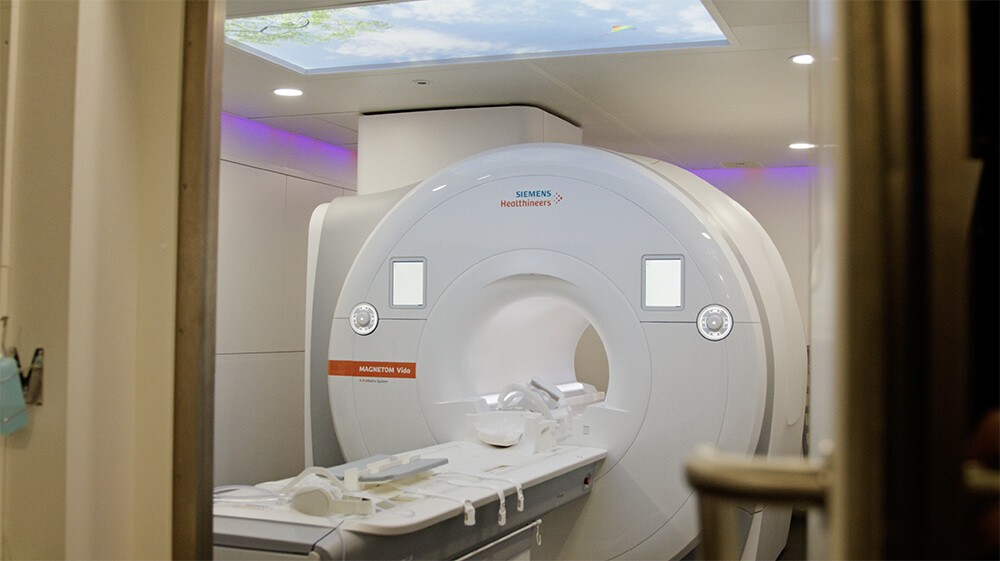
Our MRI provides a detailed, non-invasive look at your body’s internal health, including muscles, organs, and bones. Combined with an advanced blood test, we can pinpoint key health markers.
Pain-free and no radiation
Most complete view of the body
Rich data for personalized insights
Your first scan
will be soon!
Prepare together
Our advanced technology
Our MRI provides a detailed, non-invasive look at your body’s internal health, including muscles, organs, and bones. Combined with an advanced blood test, we can pinpoint key health markers.
Pain-free and no radiation
Most complete view of the body
Rich data for personalized insights
Your first scan
will be soon!
Prepare together
Our advanced technology
Our MRI provides a detailed, non-invasive look at your body’s internal health, including muscles, organs, and bones. Combined with an advanced blood test, we can pinpoint key health markers.
Pain-free and no radiation
Most complete view of the body
Rich data for personalized insights
Your first scan
will be soon!
Prepare together