We're live in 6 cities | Coming soon to more EU locations Join waitlist
We're live in 6 cities | Coming soon to more EU locations Join waitlist
We're live in 6 cities | Coming soon to more EU locations Join waitlist
Biomarkers included in
our brain analysis
Biomarkers included in
our brain analysis
Biomarkers included in the
brain analysis
Our MRI-based brain analysis gives you more clarity on important health markers and flags signals worth a closer look.
The Ahead Health check-up can show signs of certain diseases but is not conclusive or definitive for all conditions, may require follow-up tests, and does not replace other medical check-ups.
FILTER BY PACKAGE:
Compare packages
FILTER BY PACKAGE
Compare packages
Brain and nerve health
Brain volume
The ratio of total brain volume to total intracranial volume. This value typically decreases with age as brain atrophy progresses. Accelerated decline in this ratio beyond age-expected norms may suggest pathological brain volume loss.
Brain volume (abs.)
The absolute total volume of brain tissue, including gray and white matter, excluding cerebrospinal fluid. Decreased volume may indicate atrophy related to aging or neurological disorders.
Caudate volume
Normalized volume of the caudate nucleus relative to total intracranial volume, allowing for meaningful comparisons between individuals with different head sizes. This proportional measurement helps identify caudate-specific changes that may indicate neurodegenerative disorders affecting executive function and movement control.
Caudate volume (abs.)
The absolute volume of the caudate nucleus, a structure involved in motor control, learning, memory, and emotion. Volume changes may indicate neurodegenerative disorders.
Cortical gray matter volume
Normalized cortical gray matter volume relative to total intracranial volume, allowing for standardized assessment of cortical tissue across individuals with different head sizes.
Cortical gray matter volume (abs.)
The absolute volume of the cerebral cortex, the outer layer of neural tissue responsible for higher cognitive functions including perception, thought, memory, attention, and consciousness
Frontal lobe abs. volume (left)
The volume of the left frontal lobe, which is involved in executive functions, attention, working memory, and personality. Volume changes may correlate with cognitive status.
Frontal lobe abs. volume (right)
The volume of the right frontal lobe, which is involved in executive functions, attention, working memory, and personality. Volume changes may correlate with cognitive status.
Frontal lobe volume (left)
Normalized volume of the left frontal lobe relative to total intracranial volume. This proportional measurement allows comparison between individuals with different head sizes and helps assess selective frontal atrophy that might affect executive function, personality, and motor control on the right side of the body.
Frontal lobe volume (right)
Normalized volume of the right frontal lobe relative to total intracranial volume. This standardized measurement enables detection of asymmetric frontal lobe changes that may affect behavior regulation, decision-making, and motor function on the left side of the body.
Gray matter volume
Represents the percentage or ratio of gray matter volume to total intracranial volume. This metric helps identify disproportionate gray matter loss that exceeds normal aging or is inconsistent with head size, potentially indicating neurodegenerative processes
Gray matter volume (abs.)
The absolute volume of gray matter in the brain, which contains neuronal cell bodies. Reductions may indicate neurodegenerative processes or other brain pathologies.
Hippocampus volume
The hippocampus is crucial for memory formation and spatial navigation. Atrophy of the hippocampus is a hallmark of Alzheimer’s disease and can also occur in other forms of dementia.
It is associated with memory loss and disorientation.
Hippocampus volume (abs.)
The hippocampus is crucial for memory formation and spatial navigation. Atrophy of the hippocampus is a hallmark of Alzheimer’s disease and can also occur in other forms of dementia.
It is associated with memory loss and disorientation.
Occipital lobe abs. volume (left)
The volume of the left occipital lobe, primarily responsible for visual processing. Reductions may affect visual perception and recognition.
Occipital lobe abs. volume (right)
The volume of the right occipital lobe, primarily responsible for visual processing. Reductions may affect visual perception and recognition.
Occipital lobe volume (left)
Normalized volume of the left occipital lobe relative to total intracranial volume. This proportional measurement allows for standardized assessment of left occipital structure across individuals with different head sizes, helping detect selective atrophy that might affect specific visual processing functions.
Occipital lobe volume (right)
Normalized volume of the right occipital lobe relative to total intracranial volume. This standardized measurement enables more accurate detection of right occipital-specific changes independent of head size, which may affect visual perception, spatial orientation, and certain types of visual memory.
Pallidum volume
Normalized volume of the globus pallidus relative to total intracranial volume, providing a proportional measurement that accounts for differences in head size and allows for standardized comparison. This helps detect specific pallidal atrophy that could indicate movement disorders or other basal ganglia pathologies.
Pallidum volume (abs.)
The absolute volume of the globus pallidus, a structure involved in regulating voluntary movement. Reduced volume can be associated with movement disorders like Parkinson's disease and dystonia.
Perietal lobe abs. volume (left)
The volume of the left parietal lobe, which processes sensory information about the surrounding environment, spatial orientation, navigation, and some language functions.
Perietal lobe abs. volume (right)
The volume of the right parietal lobe, which processes sensory information about the surrounding environment, spatial orientation, navigation, and some language functions.
Perietal lobe volume (left)
Normalized volume of the left parietal lobe relative to total intracranial volume. This proportional measurement helps identify selective left parietal atrophy that might affect language processing, calculation abilities, and right-sided sensory integration.
Perietal lobe volume (right)
Normalized volume of the right parietal lobe relative to total intracranial volume. This standardized measurement enables detection of right parietal-specific changes that may affect spatial attention, body awareness, and left-sided sensory integration independent of head size.
Putamen volume
Normalized putamen volume as a proportion of total intracranial volume. This standardized measurement allows for more accurate detection of basal ganglia-specific changes independent of head size differences, which is important when evaluating movement disorders and certain neurodegenerative conditions
Putamen volume (abs.)
The putamen is involved in regulating movements and various types of learning. Volume loss in the putamen is associated with movement disorders such as Parkinson’s disease and Huntington’s disease.
Thalamus volume
Normalized thalamic volume relative to total intracranial volume, allowing for standardized assessment across individuals with different head sizes. This proportional measurement helps identify selective thalamic atrophy that might indicate specific neurological conditions including multiple sclerosis and certain dementias.
Thalamus volume (abs.)
The thalamus acts as a relay station for sensory and motor signals to the cerebral cortex. Thalamic atrophy can be seen in multiple sclerosis, Parkinson’s disease, and certain types of dementia. It can affect sensory processing and the relay of motor signals, contributing to various neurological symptoms.
Total Intracranial Volume (TIV)
The combined volume of the brain, cerebrospinal fluid, and meninges within the cranium. Serves as a reference for normalizing other brain volume measurements.
Brain and nerve health
Brain volume
The ratio of total brain volume to total intracranial volume. This value typically decreases with age as brain atrophy progresses. Accelerated decline in this ratio beyond age-expected norms may suggest pathological brain volume loss.
Brain volume (abs.)
The absolute total volume of brain tissue, including gray and white matter, excluding cerebrospinal fluid. Decreased volume may indicate atrophy related to aging or neurological disorders.
Caudate volume
Normalized volume of the caudate nucleus relative to total intracranial volume, allowing for meaningful comparisons between individuals with different head sizes. This proportional measurement helps identify caudate-specific changes that may indicate neurodegenerative disorders affecting executive function and movement control.
Caudate volume (abs.)
The absolute volume of the caudate nucleus, a structure involved in motor control, learning, memory, and emotion. Volume changes may indicate neurodegenerative disorders.
Cortical gray matter volume
Normalized cortical gray matter volume relative to total intracranial volume, allowing for standardized assessment of cortical tissue across individuals with different head sizes.
Cortical gray matter volume (abs.)
The absolute volume of the cerebral cortex, the outer layer of neural tissue responsible for higher cognitive functions including perception, thought, memory, attention, and consciousness
Frontal lobe abs. volume (left)
The volume of the left frontal lobe, which is involved in executive functions, attention, working memory, and personality. Volume changes may correlate with cognitive status.
Frontal lobe abs. volume (right)
The volume of the right frontal lobe, which is involved in executive functions, attention, working memory, and personality. Volume changes may correlate with cognitive status.
Frontal lobe volume (left)
Normalized volume of the left frontal lobe relative to total intracranial volume. This proportional measurement allows comparison between individuals with different head sizes and helps assess selective frontal atrophy that might affect executive function, personality, and motor control on the right side of the body.
Frontal lobe volume (right)
Normalized volume of the right frontal lobe relative to total intracranial volume. This standardized measurement enables detection of asymmetric frontal lobe changes that may affect behavior regulation, decision-making, and motor function on the left side of the body.
Gray matter volume
Represents the percentage or ratio of gray matter volume to total intracranial volume. This metric helps identify disproportionate gray matter loss that exceeds normal aging or is inconsistent with head size, potentially indicating neurodegenerative processes
Gray matter volume (abs.)
The absolute volume of gray matter in the brain, which contains neuronal cell bodies. Reductions may indicate neurodegenerative processes or other brain pathologies.
Hippocampus volume
The hippocampus is crucial for memory formation and spatial navigation. Atrophy of the hippocampus is a hallmark of Alzheimer’s disease and can also occur in other forms of dementia.
It is associated with memory loss and disorientation.
Hippocampus volume (abs.)
The hippocampus is crucial for memory formation and spatial navigation. Atrophy of the hippocampus is a hallmark of Alzheimer’s disease and can also occur in other forms of dementia.
It is associated with memory loss and disorientation.
Occipital lobe abs. volume (left)
The volume of the left occipital lobe, primarily responsible for visual processing. Reductions may affect visual perception and recognition.
Occipital lobe abs. volume (right)
The volume of the right occipital lobe, primarily responsible for visual processing. Reductions may affect visual perception and recognition.
Occipital lobe volume (left)
Normalized volume of the left occipital lobe relative to total intracranial volume. This proportional measurement allows for standardized assessment of left occipital structure across individuals with different head sizes, helping detect selective atrophy that might affect specific visual processing functions.
Occipital lobe volume (right)
Normalized volume of the right occipital lobe relative to total intracranial volume. This standardized measurement enables more accurate detection of right occipital-specific changes independent of head size, which may affect visual perception, spatial orientation, and certain types of visual memory.
Pallidum volume
Normalized volume of the globus pallidus relative to total intracranial volume, providing a proportional measurement that accounts for differences in head size and allows for standardized comparison. This helps detect specific pallidal atrophy that could indicate movement disorders or other basal ganglia pathologies.
Pallidum volume (abs.)
The absolute volume of the globus pallidus, a structure involved in regulating voluntary movement. Reduced volume can be associated with movement disorders like Parkinson's disease and dystonia.
Perietal lobe abs. volume (left)
The volume of the left parietal lobe, which processes sensory information about the surrounding environment, spatial orientation, navigation, and some language functions.
Perietal lobe abs. volume (right)
The volume of the right parietal lobe, which processes sensory information about the surrounding environment, spatial orientation, navigation, and some language functions.
Perietal lobe volume (left)
Normalized volume of the left parietal lobe relative to total intracranial volume. This proportional measurement helps identify selective left parietal atrophy that might affect language processing, calculation abilities, and right-sided sensory integration.
Perietal lobe volume (right)
Normalized volume of the right parietal lobe relative to total intracranial volume. This standardized measurement enables detection of right parietal-specific changes that may affect spatial attention, body awareness, and left-sided sensory integration independent of head size.
Putamen volume
Normalized putamen volume as a proportion of total intracranial volume. This standardized measurement allows for more accurate detection of basal ganglia-specific changes independent of head size differences, which is important when evaluating movement disorders and certain neurodegenerative conditions
Putamen volume (abs.)
The putamen is involved in regulating movements and various types of learning. Volume loss in the putamen is associated with movement disorders such as Parkinson’s disease and Huntington’s disease.
Thalamus volume
Normalized thalamic volume relative to total intracranial volume, allowing for standardized assessment across individuals with different head sizes. This proportional measurement helps identify selective thalamic atrophy that might indicate specific neurological conditions including multiple sclerosis and certain dementias.
Thalamus volume (abs.)
The thalamus acts as a relay station for sensory and motor signals to the cerebral cortex. Thalamic atrophy can be seen in multiple sclerosis, Parkinson’s disease, and certain types of dementia. It can affect sensory processing and the relay of motor signals, contributing to various neurological symptoms.
Total Intracranial Volume (TIV)
The combined volume of the brain, cerebrospinal fluid, and meninges within the cranium. Serves as a reference for normalizing other brain volume measurements.

Your health matters
to you and your insurer
Supplementary health insurers may cover part of the cost for our full-body check-ups. For example, KPT’s supplementary insurance "Pulse" reimburses up to CHF 1'500 for Ahead Health services.
We are happy to assist you in checking your eligibility.
Your health matters
to you and your insurer
Supplementary health insurers may cover part of the cost for our full-body check-ups. For example, KPT’s supplementary insurance "Pulse" reimburses up to CHF 1'500 for Ahead Health services.
We are happy to assist you in checking your eligibility.
Your health matters
to you and your insurer
Supplementary health insurers may cover part of the cost for our full-body check-ups. For example, KPT’s supplementary insurance "Pulse" reimburses up to CHF 1'500 for Ahead Health services.
We are happy to assist you in checking your eligibility.

Your health matters, to you and your insurer
Supplementary health insurers may cover part of the cost for our full-body check-ups. For example, KPT’s supplementary insurance "Pulse" reimburses up to CHF 1'500 for Ahead Health services.
We are happy to assist you in checking your eligibility.
Our advanced technology
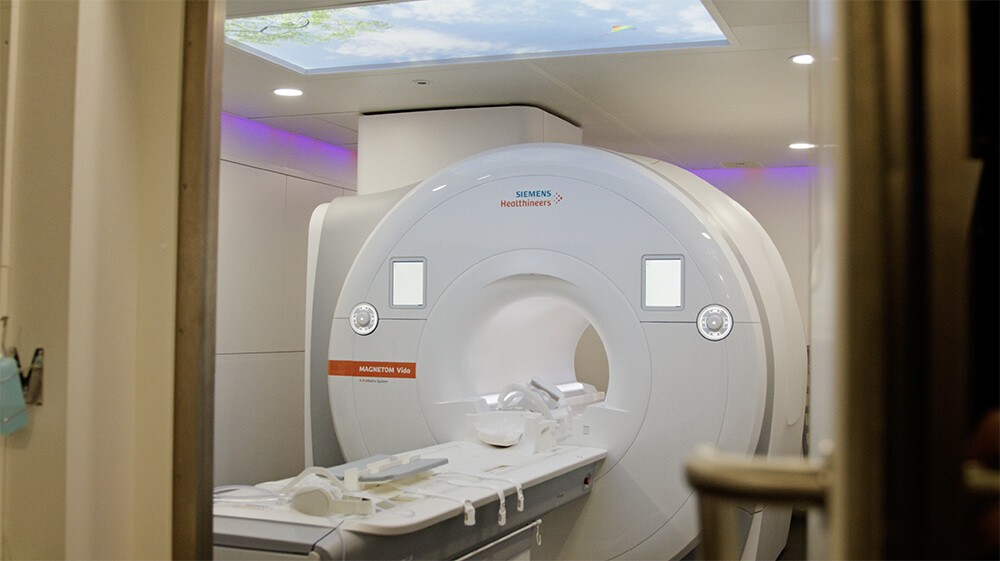
Our MRI provides a detailed, non-invasive look at your body’s internal health, including muscles, organs, and bones. Combined with an advanced blood test, we can pinpoint key health markers.
Pain-free and no radiation
Back-to-back slots in the same clinic
Most complete view of the body
Rich data for personalized insights
We’ll find a slot in your busy calendars
Your first scan
will be soon!
Prepare together