EARLY DETECTION
The 7 health metrics high-performers actually track

Written by
Nick Lenten

Reviewed by

You can track your resting heart rate, your sleep score, your daily steps. Your watch will tell you all of it. But the metrics that actually predict whether you'll stay healthy for the next twenty years? Those live deeper, in your blood and your organs, and no wearable can reach them today.
High-performers in sport, business, and medicine increasingly treat their health metrics the way they treat financial data: they want the leading indicators, not the lagging ones. A high resting heart rate or blood sugar are a lagging signals. Elevated visceral fat, a rising ApoB level or fasting insulin, on the other hand, can flag cardiovascular and metabolic risks years before any symptom appears.
According to the STADA Health Report 2023, almost 9 in 10 Europeans do not receive adequate preventive healthcare. That means the vast majority of people are flying blind on the metrics that matter most.
Here are the seven internal health metrics worth knowing, and why each one gives you information your annual check-up probably does not.
1. Visceral fat
Not all body fat is equal. Subcutaneous fat, the kind you can pinch, is less harmful than visceral fat. Visceral fat, which wraps around your liver, pancreas, and intestines, is metabolically more active and releases inflammatory compounds directly into your bloodstream.
A study in The Lancet Diabetes & Endocrinology found that visceral fat is a stronger predictor of cardiometabolic disease than BMI or waist circumference alone. You can have a normal BMI and still carry dangerous levels of visceral fat. The only way to quantify it accurately is through imaging, specifically MRI-based body composition analysis.
2. ApoB (Apolipoprotein B)
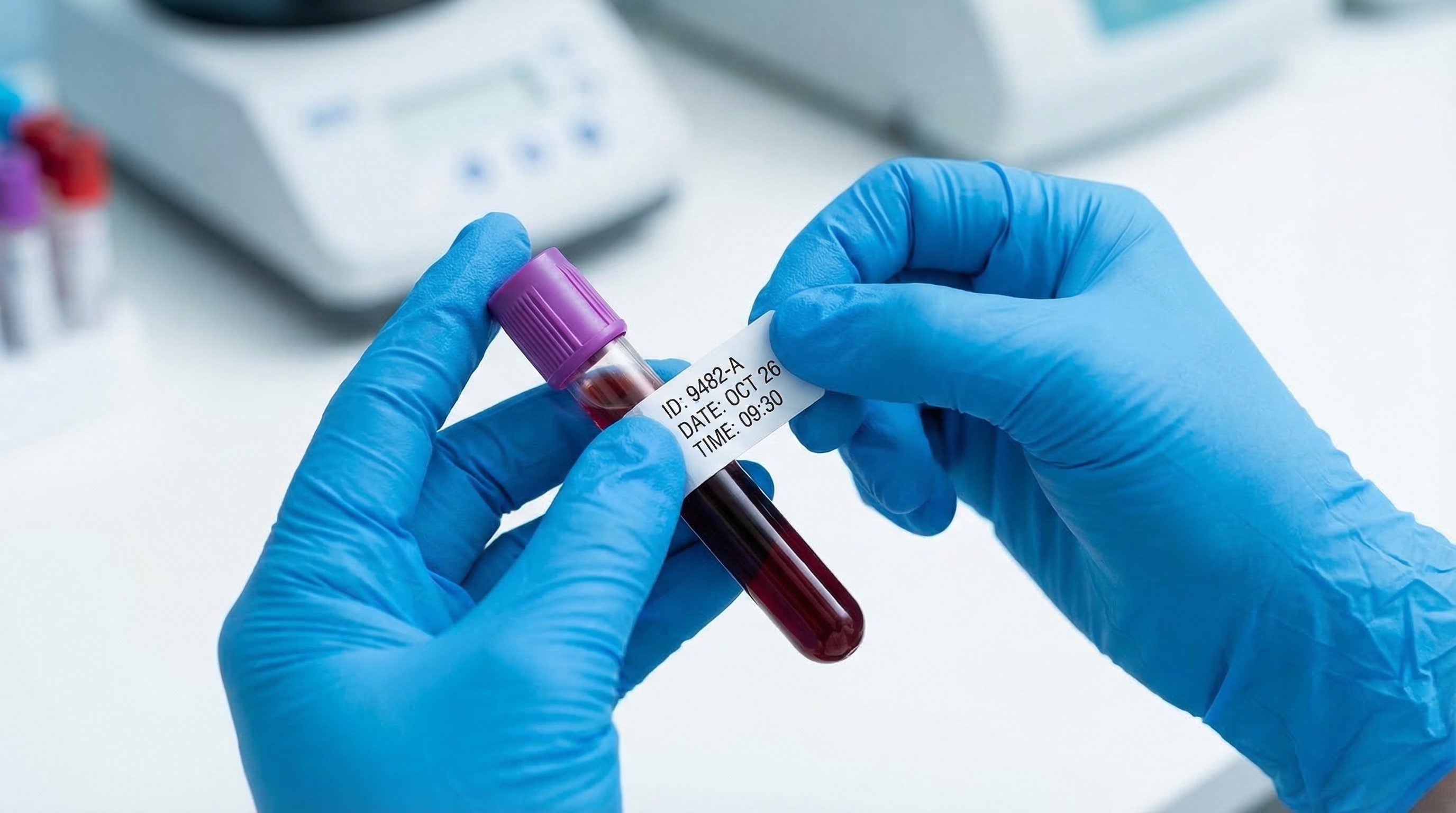
Most people know their total cholesterol. Fewer know their ApoB, which is increasingly regarded by cardiologists as a leading blood marker for cardiovascular risk. Every atherogenic lipoprotein particle, the kind that builds plaque in your arteries, carries exactly one ApoB molecule. A high ApoB count means more of these particles are circulating, regardless of what your LDL number says.
The European Society of Cardiology now recognises ApoB as a primary target in lipid management. A standard Swiss check-up typically measures total cholesterol and LDL. ApoB goes further, and it is included in Ahead's advanced blood test of 80+ biomarkers.
3. HbA1c (glycated haemoglobin)
Fasting glucose tells you what your blood sugar is doing right now. HbA1c tells you what it has been doing for the past two to three months. It reflects the percentage of haemoglobin in your red blood cells that has been coated with sugar, and it is the standard marker for diagnosing and monitoring type 2 diabetes.
The problem is that many people with rising HbA1c levels never get tested because they have no symptoms. Insulin resistance can develop silently for a decade before blood sugar crosses the diagnostic threshold. In Switzerland, around 500,000 people are estimated to live with diabetes, and a significant portion are undiagnosed, according to Diabetes Schweiz.
4. hsCRP (high-sensitivity C-reactive protein)
Chronic low-grade inflammation is implicated in heart disease, cancer, neurodegeneration, and metabolic syndrome. hsCRP measures the concentration of C-reactive protein in your blood at very low levels, picking up systemic inflammation that a standard CRP test might miss.
For cardiovascular risk stratification, hsCRP is well established. The Physicians' Health Study demonstrated that men with the highest hsCRP levels had roughly three times the risk of myocardial infarction compared to those with the lowest levels, even after adjusting for cholesterol.
A single elevated reading does not mean you are ill. But a persistently elevated hsCRP, particularly when paired with other metabolic markers, signals that something deserves attention.
5. Organ integrity
Your liver, kidneys, pancreas, spleen, and thyroid can harbour structural changes, cysts, nodules, or early tumours, long before they produce symptoms. A blood test can flag functional decline in some of these organs through markers like ALT (liver), creatinine (kidneys), or TSH (thyroid). But blood values often remain normal until significant damage has already occurred.
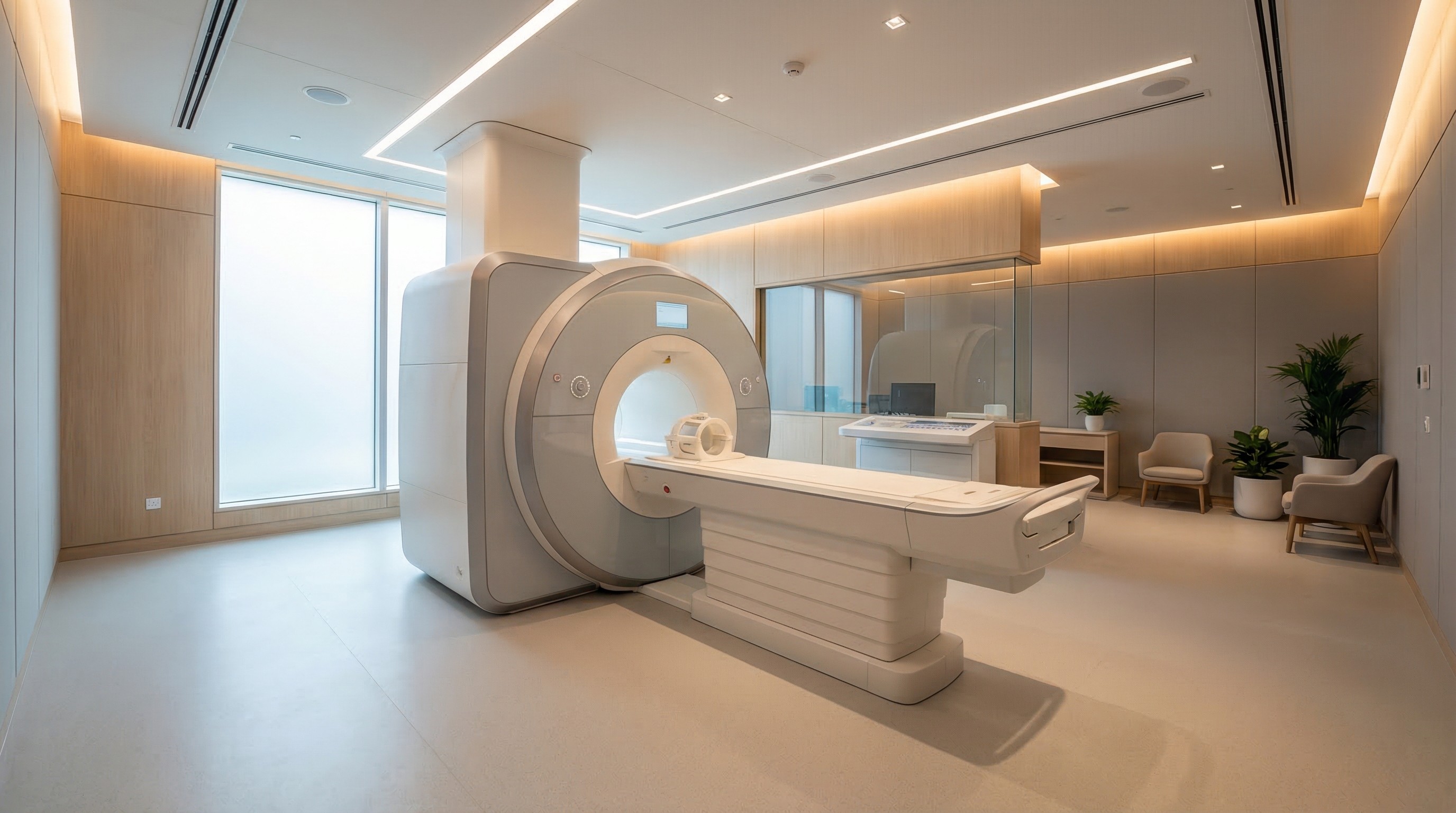
This is where imaging fills the gap. A full-body MRI provides a structural view of all major organs in a single session, detecting abnormalities that blood tests cannot see. Think of it this way: blood tests check the software, imaging checks the hardware. Together, they give a far more complete picture.
6. Arterial health
Heart disease remains the leading cause of death in Switzerland, according to the Swiss Federal Statistical Office (BFS). In many cases, the first consequence of coronary artery disease is a heart attack.
Through a stress-ECG or calcium scoring, coronary artery disease can be diagnosed. Calcium scoring and stress ECGs serve different, complementary roles: a calcium score measures plaque buildup to assess long-term risk, while a stress ECG evaluates functional, real-time blood flow to the heart. Generally, calcium scoring is used for risk screening in asymptomatic, intermediate-risk individuals, whereas stress ECG is used for symptomatic patients to detect potential ischemia. Calcium scoring via CT measures the amount of calcified plaque in your coronary arteries and gives you an Agatston score, one of the strongest predictors of future cardiac events. A score of zero is highly reassuring. A score above zero, even modestly, changes the conversation around prevention.
Many standard Swiss check-ups neither include stress-ECG nor calcium scoring. Coronary artery disease is therefore often diagnosed at a late stage of even only during a heart attack.
7. Body composition (muscle-to-fat ratio)
Weight alone tells you almost nothing about your health. A 90-kilogram person could be carrying 25% body fat or 12%. The difference in disease risk is enormous.
Body composition analysis via MRI quantifies lean muscle mass, fat mass, and the distribution of both across your body. It can also measure intramuscular fat, a marker of muscle quality that is relevant for metabolic health and physical resilience, especially as you age.
In Switzerland, where hiking, cycling, and skiing are cultural staples, many people assume they are fit. Ahead Health’s MRI-based body composition can confirm that assumption or reveal surprising imbalances, like high visceral fat in someone who exercises regularly but eats poorly.
Why these seven together
Any single metric in isolation can mislead. Normal cholesterol and LDL does not rule out cardiovascular risk if your ApoB is elevated. Normal HbA1c does not rule out risk of diabetes type 2 if your insulin resistance is high. Clean blood markers do not mean your organs are structurally sound. Low visceral fat does not protect against coronary plaque.
This is why Dr. Anna Erat, founding medical advisor at Ahead Health, advocates for triangulation:
"A single number can mislead. Someone can have a normal HbA1c and still be metabolically at risk if their ApoB is elevated and their inflammation markers are up. The real picture comes from reading these markers together."
The reactive model of healthcare waits for one of these metrics to cause a problem, then investigates. The proactive model measures all of them at baseline, so you know where you stand before anything goes wrong.

How Ahead Health measures all seven
Ahead's Advanced package (CHF 2,490) covers all seven metrics in a single appointment. It combines a full-body MRI – including the body composition analysis – with an Advanced blood test covering 80+ biomarkers, including ApoB, HbA1c insulin resistance, hsCRP, lipid panels, liver and kidney markers, and more. For a broader baseline that includes brain analysis, hips and knee screening, vitamin and hormonal blood panels, Ahead Pro (CHF 3,549) extends the assessment further.
The full-body MRI scans all major organs and the musculoskeletal system. The blood test captures the metabolic, inflammatory, and cardiovascular markers. Body composition adds visceral fat quantification and muscle-to-fat ratio. Together, these tests give you a dataset that most people never see until something has already gone wrong.
A calcium score CT can be added for direct coronary artery assessment.
Ahead's services are designed to complement your GP, not replace them. Your results come with a physician-reviewed health report and, if needed, a consultation to interpret findings and plan next steps.
Supplementary health insurers may cover part of the cost. KPT, CSS, AXA, Visana and Atupri are all reimbursing part of the cost for Ahead Health services depending on their T&Cs, some with up to CHF 1,500. You can check how much you can get reimbursed and request a pro-forma invoice on our insurance page.
Conclusion
The gap between what wearables measure and what actually drives long-term health is wide. Heart rate variability, step counts, and sleep stages are useful, but they do not tell you whether your arteries are calcifying, your liver is developing a nodule, or your visceral fat is quietly rising.
The seven metrics above are measurable, actionable, and available today. Tracking them does not require waiting for symptoms. It requires deciding that knowing is better than guessing.
FAQ
Do I need a doctor's referral to get these tests?
Does Swiss health insurance cover preventive blood tests and MRI?
Can I get just the blood test without the MRI?