Cancer survival rates: statistics and early detection
27 March 2026



Cancer kills millions every year. It also, increasingly, does not, depending on the stage and type of cancer. Over the past three decades, survival rates have climbed sharply for several types of cancer, driven by better screening, more precise treatments, and smarter prevention. The numbers are worth knowing. They reveal which cancers are most lethal, which are most beatable, and where early detection makes the starkest difference.
This guide lays out the latest cancer survival data by type, examines the financial burden of treatment, and explains what full-body MRI and advanced blood tests add to traditional screening.
Global cancer statistics: the scale of the problem
Cancer is common, and it is becoming more common.
Incidence worldwide
- Nearly 2 in 5 people will receive a cancer diagnosis in their lifetime
- By 2040, the world is projected to see 28.4 million new cases per year and 16.3 million deaths annually
- Breast, lung, colorectal, and prostate cancers together account for more than 40% of all diagnoses
Death rates in Europe and Switzerland
Cancer kills men at a higher rate than women across Europe, as it does globally. According to EUROSTAT and the European Cancer Information System (ECIS) , cancer is the second leading cause of death in the EU, accounting for around 26% of all deaths. In Switzerland specifically, roughly 46,000 people receive a cancer diagnosis each year, and around 17,000 die from the disease – making it the second leading cause of death after cardiovascular disease, according to the Swiss Federal Statistical Office .
Across Europe, the most commonly diagnosed cancers are breast, colorectal, lung, and prostate. Survival rates vary considerably by country, reflecting differences in healthcare access, screening infrastructure, and the timeliness of diagnosis.
Cancer in children
Childhood and adolescent cancer is rare in absolute terms. In Europe, approximately 35,000 children and adolescents are diagnosed annually. Survival rates have improved substantially over decades thanks to advances in treatment, with five-year survival now exceeding 80% in high-income European countries for the most common types.
5-year survival rate: what the numbers tell us
The 5-year survival rate is oncology's standard benchmark – the percentage of patients still alive five years after diagnosis. It says nothing about any individual case, but it shows, at population level, how well medicine is doing against specific cancers.
5-year survival rates by cancer type
The range is wide:
| Cancer type | 5-year survival rate |
|---|---|
| Breast cancer | ~92% |
| Prostate cancer | >95% (localised) |
| Melanoma | >90% (localised) |
| Lung cancer | ~28% |
| Liver cancer | ~22% |
The gap between breast and lung cancer reflects something important: breast cancer benefits from widespread mammography programmes.
Lung cancer survival rate has improved substantially through immunotherapy and targeted treatments, but is still caught late more often than not.
The pattern holds across cancer types. The earlier a cancer is found, the higher the survival rate. This is the single most consistent finding in oncology.
Prostate cancer survival rate
Prostate cancer is among the most survivable cancers when caught early. In Switzerland, it is the most common cancer in men – roughly 7,000 new diagnoses per year, according to Krebsliga Schweiz . Localised prostate cancer carries a 5-year survival rate above 95%; once metastasised, that figure drops sharply. Regular screening – PSA blood tests and increasingly MRI-based imaging – may help catch the disease before it spreads.
Cancer survivors: a growing population
The survivor count is rising across Europe and globally, driven by earlier detection and better treatment.
According to ECIS , Europe has an estimated 12 million people living after a cancer diagnosis within the past five years. In Switzerland, Krebsliga estimates over 300,000 people are living with or after cancer. The share of people surviving five or more years has increased significantly for many cancer types over the past two decades.
Globally, 5-year cancer survivors are projected to increase by 53% by 2040 compared to 2022 levels, driven by ageing populations and improving treatment. Over three-quarters of survivors are aged 60 or older.
Millions of people are alive today because screening caught their cancer in time, allowing timely treatment. Millions more could be, if detection shifted earlier.
The cancer death rate is falling
A sustained decline across Europe
According to ECIS and the European Cancer Information System , age-standardised cancer mortality rates have declined steadily across Europe since the early 1990s. The drop has been most pronounced in lung cancer (linked to falling smoking rates), breast cancer (driven by mammography screening and improved treatment), and colorectal cancer (earlier detection through colonoscopy). In Switzerland, both incidence and mortality trends broadly follow the Western European pattern.
For comparison, the US cancer death rate has fallen by 34% since 1991 – one of the more cited data points in oncology, and broadly consistent with European trends over the same period. The drivers are similar everywhere: reduced smoking, broader screening programmes, and more effective treatments including targeted therapy and immunotherapy.
Tobacco: the biggest single lever
Tobacco remains the leading preventable cause of cancer death in Europe. The WHO Europe's Framework Convention on Tobacco Control has driven consistent reductions in smoking prevalence across the region. Switzerland's smoking rate has fallen from over 33% in the early 2000s to around 25% today, with further reductions targeted under national health policy.
Prevention works. Screening can help catch what prevention misses.
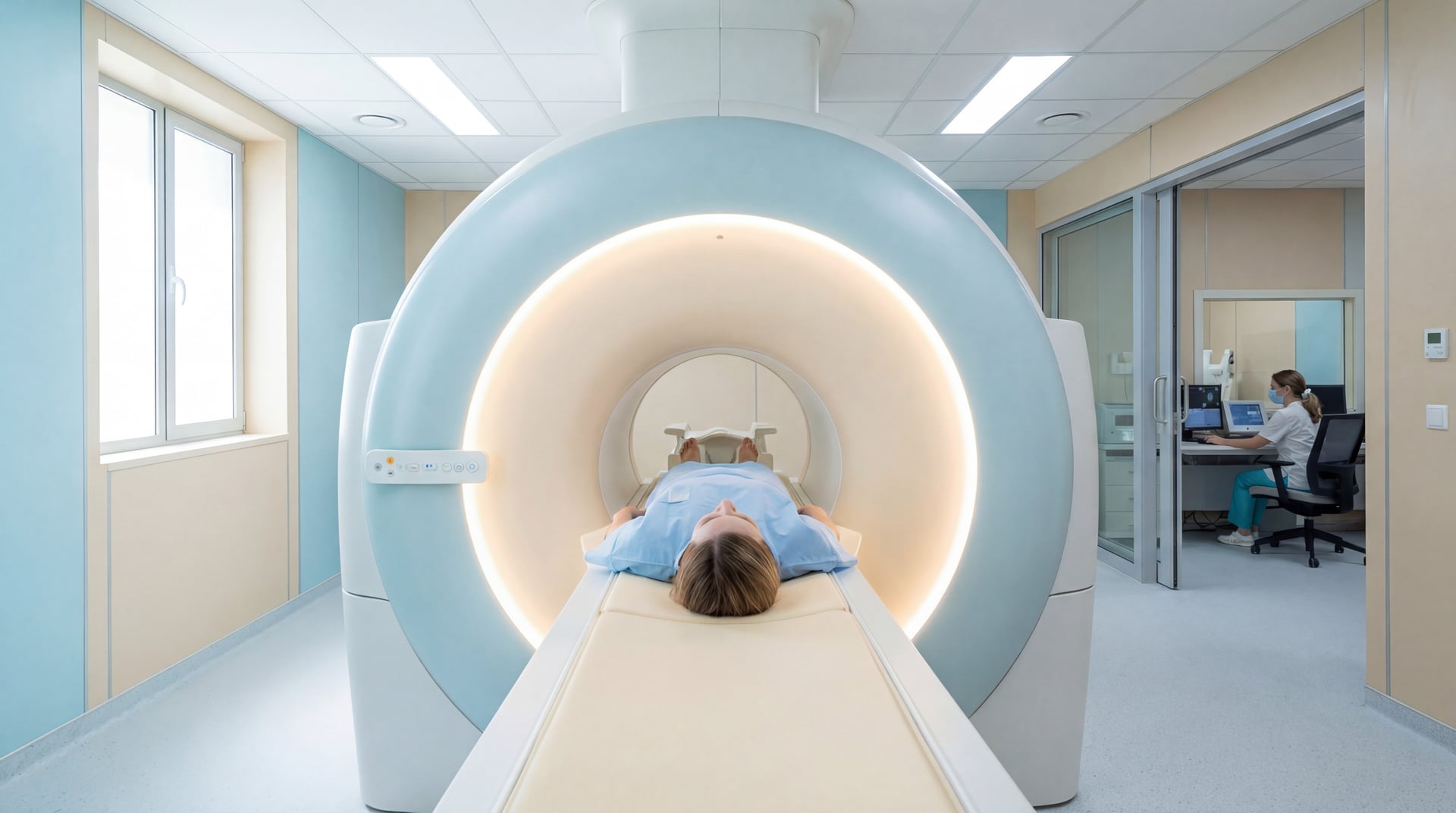
The financial burden of cancer
Cancer's costs extend well beyond the medical. In Europe, the total economic burden of cancer – including healthcare costs, lost productivity, and informal care – is estimated at over €100 billion per year , with treatment costs rising as incidence grows and therapies become more complex.
In Switzerland, cancer treatment is covered by basic health insurance (“Grundversicherung”), but costs to individuals – through copayments, loss of income, and ancillary expenses – can be significant. Late-stage treatment is substantially more expensive than early-stage intervention. The economic case for early detection is as strong as the clinical one: catching a cancer at Stage 1 rather than Stage 4 reduces treatment burden, hospitalisation, and long-term care costs for both patients and the system.
Early detection: the variable that matters most
All cancer data points in one direction: early detection transforms survival.
The stage gap – what European data shows
The survival gap between stages is vast. For many cancers, Stage 1 detection means a 5-year survival rate above 90%. Stage 4 detection can drop that below 20%. The proportion of cancers caught at early stages varies considerably across Europe, reflecting differences in screening infrastructure, healthcare access, and how proactively people engage with preventive care.
The NHS in England has set a target of 75% of cancers diagnosed at Stage 1 or 2 by 2028 , up from around 38% today. That target is widely cited as a European benchmark. It quantifies the scale of the gap that exists between what early detection could achieve and where most health systems currently operate. Switzerland's situation is broadly comparable: most cancers are still caught at later stages, not because early-stage disease couldn't have been found, but because proactive imaging is not part of standard care.
Where standard screening falls short
Standard screening is organ-by-organ and age-gated:
- Mammography covers breast cancer, but with limitations. For women with dense breast tissue, which affects roughly 40% of the population, mammography is significantly less accurate. A 2024 meta-analysis in Radiology found MRI detected 2–4 times more cancers than mammography in women with dense breasts. Ahead has written in more detail about why MRI is more accurate than mammography for dense breast tissue .
- Colonoscopy covers colorectal cancer only
- PSA tests cover prostate cancer only
- Many cancers – pancreatic, kidney, liver – have no routine screening in most healthcare systems, including Switzerland's
This approach means cancers without a dedicated screening programme are likely caught only after symptoms appear – which can already be too late.
In Switzerland, the basic health insurance covers screening for a narrow set of cancers at specific age thresholds . The standard check-up provides a baseline, but it does not include whole-body imaging, and it does not screen for most cancer types. This is the structural gap that proactive imaging addresses.
Developments reshaping cancer care
- Personalised cancer vaccines: mRNA-based cancer vaccines are being developed to target an individual patient's tumour. Unlike chemotherapy, which attacks all rapidly dividing cells, these vaccines train the immune system to recognise specific cancer cells. Clinical trials are underway with early results suggesting efficacy and fewer side effects than conventional treatments.
- Multi-cancer blood tests: Multi-cancer early detection (MCED) blood tests analyse proteins, cell-free DNA, and other biomarkers to identify signals from multiple cancer types in a single draw. They are less invasive than imaging and can help catch cancers that currently lack any screening protocol, such as pancreatic, ovarian, and liver cancers.
- Precision oncology: Detailed genetic and molecular profiling of a patient's tumour now allows oncologists to target the specific mutations driving growth. The result: higher response rates, fewer side effects, better survival.
- AI in cancer care: Machine learning algorithms are analysing medical images – MRI, CT, pathology slides – and identifying tumours that human radiologists miss. AI is also being used for risk assessment, treatment planning, and outcome prediction, particularly where specialist oncologists are scarce.
How Ahead Health supports cancer early detection
Ahead Health's view is straightforward: the best cancer outcome is one where the disease is found so early it never becomes dangerous. Standard Swiss check-ups are reactive : triggered by symptoms or age. Ahead's assessments are proactive: designed to establish your baseline before problems surface.
The approach combines two layers. The hardware layer: Ahead's full-body MRI , a radiation-free scan that checks for abnormalities across the entire body in a single session, covering organ systems that have no dedicated screening programmes under standard Swiss care. The software layer: advanced blood panels measuring 80+ biomarkers linked to cancer and cardiovascular risk, inflammation, organ function, and metabolic health. The two layers complement each other and may detect what the other might miss. You can see the full list of conditions Ahead screens for on the what we detect page .
The combination of imaging and blood data gives a picture substantially more complete than either alone.
Ahead Advanced (CHF 2,490) covers full-body MRI plus an 80+ biomarker blood panel, gender-specific screening (prostate or ovaries), and MRI-based body composition.
Ahead Pro (CHF 3,549) extends this with a broader baseline: brain analysis, hip and knee screening, and expanded vitamin and hormonal blood panels.
Every result is reviewed by Swiss board-certified physicians, supported by AI-assisted analysis.
Ahead's assessments complement your GP (“Hausarzt”) rather than replacing them. Results go to you and, if you choose, to your GP, giving your doctor the kind of detailed baseline data that standard care doesn't produce.
Supplementary health insurers may cover part of the cost. KPT, CSS, AXA, Visana and Atupri are all reimbursing part of the cost for Ahead Health services depending on their T&Cs, some with up to CHF 1,500. You can check how much you can get reimbursed and request a pro-forma invoice on our insurance page .
Finding potential issues when they are small and manageable is the best time to find them. That is the point of screening.
Conclusion
The sustained fall in cancer mortality across Europe and globally since the 1990s is one of medicine's biggest achievements. It was built on lifestyle changes (including reduced smoking), broader screening, and improved treatment – all pulling in the same direction. The next gains will come from moving detection earlier still: closing the gap between Stage 4 diagnoses and Stage 1 ones. Whole-body imaging and multi-cancer blood tests exist to help make that shift. The question is whether people use them before symptoms arrive.
Ahead Health provides preventive health screenings in Switzerland, combining full-body MRI scans, advanced blood tests, and AI-powered health insights. Learn more at aheadhealth.com .
Sources
- Siegel RL, Giaquinto AN, Jemal A. "Cancer Statistics, 2025." CA: A Cancer Journal for Clinicians. 2025;75(1):10–29. https://doi.org/10.3322/caac.21834
- International Agency for Research on Cancer (IARC). Global Cancer Observatory (GLOBOCAN 2022). WHO. https://gco.iarc.who.int/
- European Cancer Information System (ECIS). Cancer burden in the European Union. Joint Research Centre. https://ecis.jrc.ec.europa.eu/
- Swiss Federal Statistical Office (BFS). Cancer in Switzerland. https://www.bfs.admin.ch/bfs/en/home/statistics/health/health-status/cancer.html
- Krebsliga Schweiz. Krebs in der Schweiz: Wichtige Zahlen. https://www.krebsliga.ch/ueber-krebs/zahlen-fakten/
- NHS England. NHS Long Term Plan – Cancer. https://www.longtermplan.nhs.uk/areas-of-work/cancer/
- WHO Europe. Framework Convention on Tobacco Control. https://www.who.int/europe/initiatives/who-framework-convention-on-tobacco-control
Frequently asked questions

CEO
First employee, CTO, and CMO at Coolblue, contributing to a 1B+ exit. Former product executive at Google for Flights and Shopping, and CCO at Suitsupply, overseeing DTC growth with 100+ stores. Recently incubated the consumer healthtech company, Everyman.